


There is no single best pair of work trousers for every trade. Electricians often want freedom of movement and organised storage, carpenters holster and ruler pockets, and builders hard-wearing fabric, reinforced knees and an all-day fit. If a task needs specialist protective clothing, choose certified PPE for the assessed hazard rather than ordinary work trousers.
The right pair makes the day easier: pockets where you need them, fabric that moves with you and a fit that works when you bend or kneel. Recommendations here are based on manufacturer specifications and listed features, not hands-on wear testing.
Work Trousers at a Glance: What Matters Most?
| Feature | Why it matters | Who values it |
|---|---|---|
| Stretch panels | Easier bending, climbing and crouching | Electricians, installers |
| Holster and cargo pockets | Keeps small items to hand | Carpenters, builders |
| Reinforced knees | Fabric tolerates abrasion | Floor-level and kneeling work |
| Knee-pad system | Can support suitable knee protection when correctly paired | Anyone who kneels |
| Fit and leg length | Avoids bunching and dragging | Every trade |
| Weather-specific fabric | Suits cold or wet sites when specified | Outdoor workers |
Easy movement, organised small-item pockets. Specialist PPE where the hazard requires it.
Holster and ruler pockets, reinforced storage, comfort when bending.
High-wear reinforcement, suitable fit and stretch, a knee system where needed.
Best Work Trousers for Electricians
Electricians move between standing, crouching and confined spaces. Look for an unrestricted fit, pockets for small accessories and the right leg length. Large hanging pockets aren't essential, and some prefer a cleaner profile in tight areas.
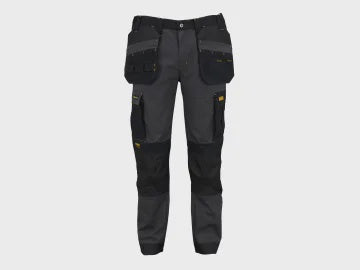
DeWalt Albany Slim Fit Trousers
Ripstop pro-stretch (64% polyester, 33% cotton, 3% elastane) with front, cargo and ruler pockets. Sold by waist and leg size; limited sizes in stock.
View at DBR ToolsThe listing doesn't establish certified electrical-arc protection or a certified knee-pad system, so don't assume either.
Are regular work trousers suitable for electrical work? Ordinary trousers are not automatically flame-resistant, insulating or arc-rated. Where a risk assessment identifies arc, heat or flame exposure, select protective clothing certified for that hazard. A polyester-blend trouser is never a substitute.
Best Work Trousers for Carpenters and Joiners
Carpenters want small-item storage without a separate pouch. Holster pockets, a ruler pocket, durable seams and freedom of movement matter more than the number of compartments.
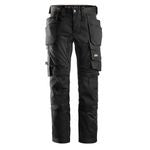
Snickers 6241 AllroundWork Stretch
2-way stretch, 4-way stretch back panels, pre-bent legs, holster, ruler and cargo storage and the KneeGuard pocket system. Slim leg. Limited sizes in stock.
View at DBR Tools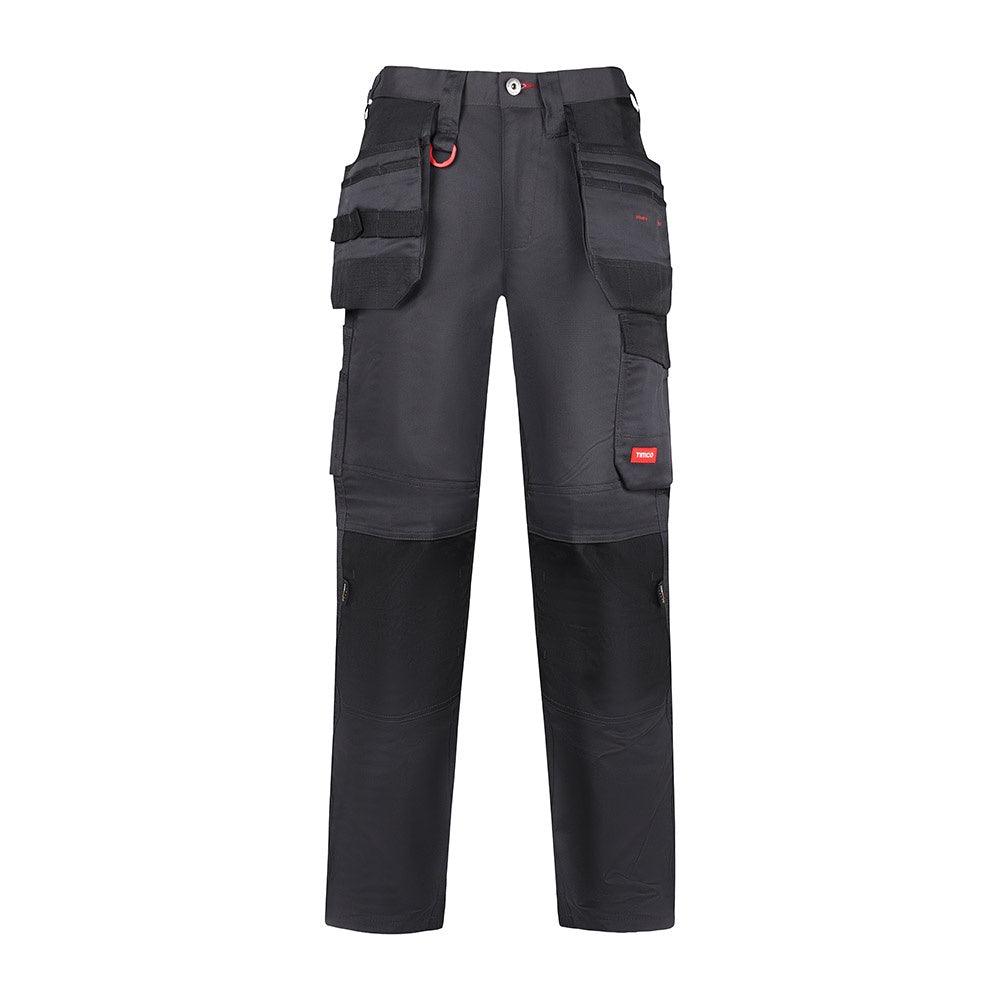
Timco Craftsman Heavy Duty 4-Way Trousers
Heavy-duty 4-way stretch work trousers in grey/black. Each waist size is a separate listing, so check the size you need.
View at DBR ToolsKnee-pad pockets don't, on their own, establish a certified protective combination. Pads are sold separately.
Best Work Trousers for Builders and General Site Work
Builders work across rough surfaces and changing positions. Look at reinforced high-wear areas, fabric weight, practical pockets and fit, without being so restrictive that a full day becomes uncomfortable.
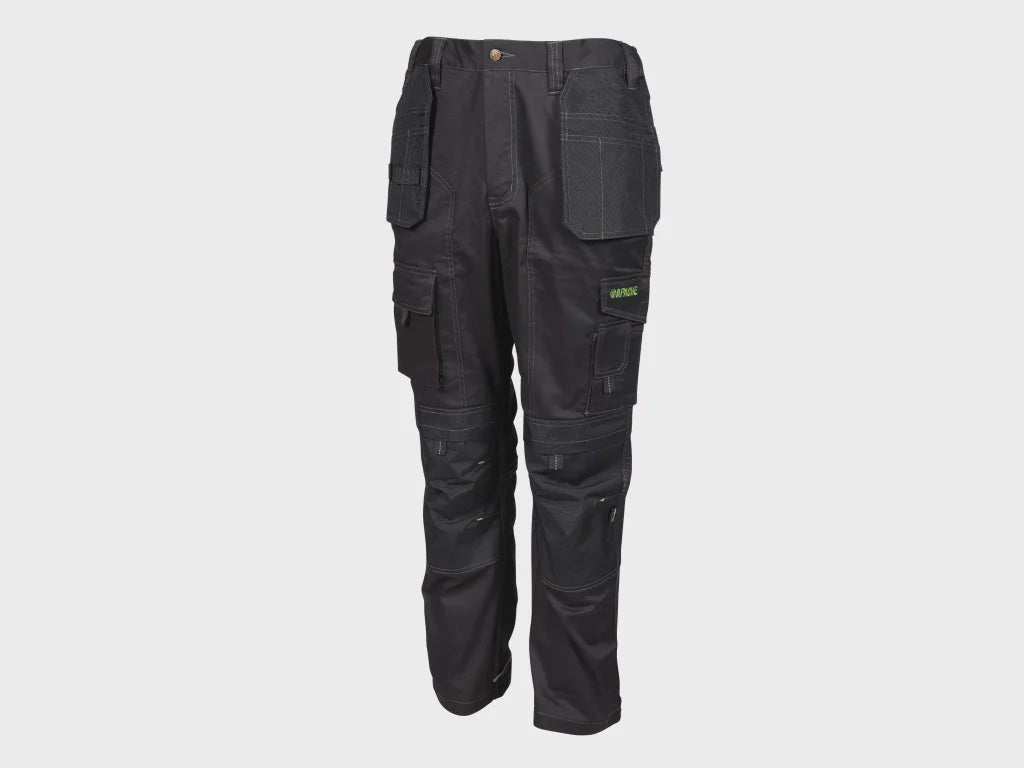
Apache APKHT TWO Holster Trousers
Regular fit, stretch yoke and gusset, double-layer thighs and CORDURA-reinforced holster, hem and knee-pad pocket areas. Each size is a separate listing; this one is W32 L29.
View at DBR Tools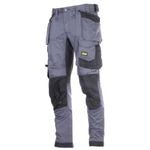
Snickers 6251 AllroundWork Loose Fit
A more relaxed cut than the 6241, with 2-way stretch, 4-way stretch back panels, holster and cargo pockets and KneeGuard. Limited sizes in stock.
View at DBR ToolsFabric weight alone doesn't establish lifespan, and a loose fit is a preference, not a performance advantage. Choose a cut that allows movement without excess fabric around equipment.
Holster Pockets vs Regular Cargo Pockets
Holster pockets are hanging or expandable pockets for frequently used small items. They suit installation and site work but can be bulky in confined spaces. Cargo pockets sit closer to the leg for items you don't need constantly. Prioritise placement and secure storage over pocket count, and avoid heavy or dangling items near moving equipment.
What Do Knee-Pad Pockets Actually Protect?
Knee-pad pocket
A feature of the trousers
Holds a pad and reinforces the fabric. It does not certify any protection by itself.
Certified knee protection
A tested system
The exact garment and pads form a manufacturer-supported combination, tested to EN 14404.
Reinforced knees improve the durability of the fabric; they are not certified knee protection. EN 14404 covers knee protectors for kneeling work, and BS EN 14404-3:2024 covers knee pads combined with garments (Type 2). Snickers states its certified KneeGuard systems apply only with the specified compatible Snickers trousers and pads. Before buying, check the pocket size, the approved inserts and the joint garment-and-pad certification where protection is required.
Stretch, Ripstop and CORDURA: What Do They Mean?
Stretch panels improve movement, but where the stretch sits matters more than the blend. Ripstop uses a reinforcing pattern to help limit the spread of some tears; it isn't cut-proof or waterproof. CORDURA is a family of durable textiles used for high-wear patches and pockets. It helps durability, but a compatible certified pad system is what matters for knee PPE.
How to Choose the Correct Size and Fit
- Measure your waist rather than relying on your jeans size.
- Check the inside leg against the exact variant.
- Pick your cut: slim, regular or loose.
- Check knee-pocket position standing and kneeling, with approved pads inserted.
- Read returns and care instructions before buying several pairs.
Use the manufacturer's size guide, since a style name doesn't guarantee identical sizing across brands. Several of our listings are single sizes, so confirm the waist and leg you need before ordering.
Are Expensive Work Trousers Worth It?
Price can reflect specialised fabrics and pocket systems, but it doesn't prove a pair lasts longer for every user. Someone working indoors who rarely kneels may be well served by simple stretch trousers; someone on site all day may value reinforced storage and a compatible pad system. Pay for features you'll use.
Quick Comparison: DBR Tools Work Trousers
| Model | Published highlights | Buyer profile |
|---|---|---|
| DeWalt Albany | Slim fit, ripstop pro-stretch, cargo and ruler pockets | Streamlined everyday option |
| Snickers 6241 | Slim leg, holster pockets, stretch panels, KneeGuard | Carpentry and installation |
| Timco Craftsman | Heavy-duty 4-way stretch, grey/black | Hard-wearing general use |
| Apache APKHT TWO | Regular fit, stretch gusset, CORDURA reinforcement | General building and site use |
| Snickers 6251 | Loose fit, stretch panels, holster pockets, KneeGuard | Buyers who want more room |
Frequently Asked Questions
What work trousers are best for electricians?
Prioritise unrestricted movement, sensible pocket storage and a comfortable fit. If a risk assessment calls for arc-rated or flame-protective clothing, ordinary work trousers are not a substitute for properly specified certified PPE.
Are holster pockets worth having?
They help when you repeatedly need small items. For a slimmer profile, cargo or ruler pockets may be preferable.
Do trousers with knee-pad pockets count as PPE?
Not automatically. The exact pads and garment must form a manufacturer-supported protective system where certified knee protection is required.
Are slim-fit or loose-fit trousers better?
Neither. Slim styles feel less bulky, loose fits give more room. Fit must allow normal movement without snagging.
Are ripstop work trousers waterproof?
No. Ripstop describes the fabric construction, not a waterproof rating. Choose specifically rated weatherproof clothing if you need rain protection.
Final Verdict: Choose Work Trousers for the Work You Actually Do
The best trousers fit properly, move comfortably and have the right pockets for your tasks. For kneeling work, check certified knee-pad compatibility; for special hazards, follow your risk assessment and buy the correct protective clothing.
Check stock, size and product documentation before ordering.
Shop clothing