


Steel and composite safety toe caps can both meet the same UK impact and compression requirements. The more useful differences are weight, toe-box shape, temperature conduction and whether the boot contains metal. Choose by the full certification, fit and workplace hazards, not by assuming one material always protects more.
If you're comparing safety boots for construction, warehousing, installation or trade work, you'll meet both steel toe and composite toe footwear. Steel is the traditional option; non-metallic caps may use fibreglass, carbon fibre or engineered polymers. This guide is based on published standards and product documentation, not hands-on testing.
Steel Toe vs Composite Toe: At a Glance
Steel toe
Metal protective cap
Often a slimmer cap profile, but may add weight and conducts heat and cold. Check the full boot specification.
Composite / fibreglass toe
Non-metallic protective cap
Often lighter and conducts less heat and cold, but some designs have a bulkier toe box. Check the whole boot for metal.
| Feature | Steel toe cap | Composite / fibreglass cap |
|---|---|---|
| Cap material | Metal, usually steel | Non-metallic, e.g. fibreglass or engineered composite |
| Certified toe protection | 200 J impact and 15 kN compression | The same minimum requirements |
| Cap weight | Often heavier | Often lighter; total boot weight varies |
| Toe-box profile | Can be comparatively slim | Some designs need more toe room |
| Hot and cold | Metal conducts heat and cold | Lower thermal conductivity |
| Metal detectors | Cap is metallic | Cap is non-metallic; other parts may contain metal |
Key point: a composite cap isn't automatically more protective than steel, nor steel automatically stronger in any useful buying sense. Compare certified footwear built for your job.
Steel toe boots
A steel cap's strength lets many designs use a comparatively slim cap. Steel is common in construction, workshops and logistics. Considerations: it can add weight, conducts heat and cold, and contains metal that may matter in security-controlled sites. A well-designed steel-toe boot can still be comfortable, so compare whole boots.
Composite toe boots
These use fibreglass, carbon-fibre composites or engineered polymers. They're often lighter, contain no metal in the cap and conduct less heat and cold. Some caps are bulkier than steel. Composite toe doesn't mean the whole boot is metal-free, lightweight, waterproof, puncture-resistant or suitable for electrical work.
Are Steel Toe Boots Safer Than Composite Toe Boots?
Not automatically. Under EN ISO 20345, qualifying toe caps are tested for resistance to a 200-joule impact and 15-kilonewton compression, whatever material they're made from.
Same baseline for certified steel and non-metallic caps.
Certification and suitability matter more than cap material alone.
That's a baseline, not a promise against every injury. Two boots can both have 200 J caps yet differ greatly in underfoot protection, slip resistance, water resistance and fit. Look for the product marking, certification and instructions: in UK retail you may meet EN ISO 20345:2011 or the updated EN ISO 20345:2022. Don't infer a full rating from steel toe or composite toe.
Weight, Hot and Cold
A non-metallic cap is often lighter, but total boot weight depends on much more: upper, outsole, midsole, cushioning, height and size. Check published weights for your size. Metal also conducts heat and cold more readily, which can favour composite caps, but lining, insulation, breathability and waterproofing matter just as much, so look for temperature or water claims on the whole boot.
Electricians and Metal-Free Boots
A non-metallic toe cap does not make a boot electrically insulating. Electrical hazards need footwear chosen to your risk assessment. ESD or antistatic footwear controls static electricity and is not a substitute for footwear certified against electric shock.
Nor does composite toe mean metal-free: a boot might have a fibreglass cap but metal eyelets or an underfoot insert. For security screening, look for an explicit metal-free construction statement for the whole model.
Toe Cap vs Midsole: An Important Difference
A toe cap protects the front of the foot against impact and compression. A penetration-resistant insert is a separate part that reduces the risk from sharp objects underfoot. Under EN ISO 20345:2022 you may see:
| Marking | What it describes |
|---|---|
| SB | Basic toe-cap safety footwear. Doesn't by itself confirm penetration protection. |
| P | Penetration-resistant metallic insert, 4.5 mm nail test |
| PL | Non-metallic penetration-resistant insert, 4.5 mm nail test |
| PS | Non-metallic penetration-resistant insert, 3.0 mm nail test |
| S1PS | S1 requirements plus PS underfoot protection |
| S3L | S2 requirements plus cleated outsole and PL underfoot protection |
P, PL and PS describe underfoot penetration resistance, not the toe-cap material. An S1PS boot can have a fibreglass toe cap, but PS describes its insert.
Is S3L waterproof? Not necessarily. S3L includes water-penetration-and-absorption requirements for the upper, which isn't whole-footwear water resistance. For prolonged wet work look for the WR marking and confirm the manufacturer's specification.
Steel and Non-Metallic Safety Boots at DBR Tools
These are product examples, not a ranking. Their safety classes differ, so don't compare them on toe-cap material alone. Sizes are limited, with each size a separate listing, so check the size you need.
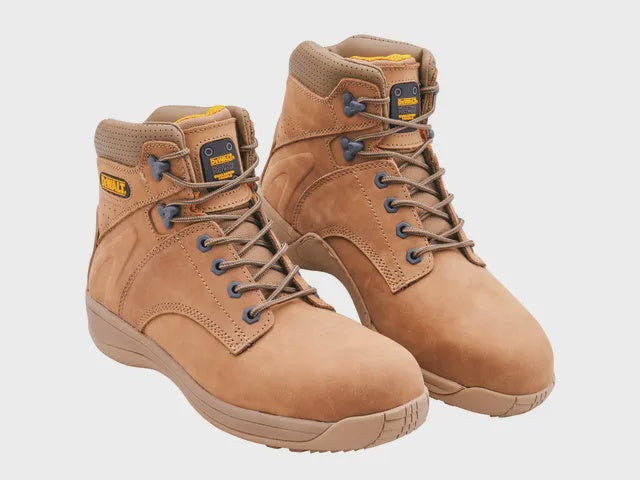
DeWalt Extreme Stone SB Safety Boots, Size 8
Nubuck leather boot with a 200 J steel toe cap, padded collar and tongue. Rated SB to EN ISO 20345:2011. SB alone doesn't confirm underfoot penetration protection. Each size is a separate listing.
View at DBR Tools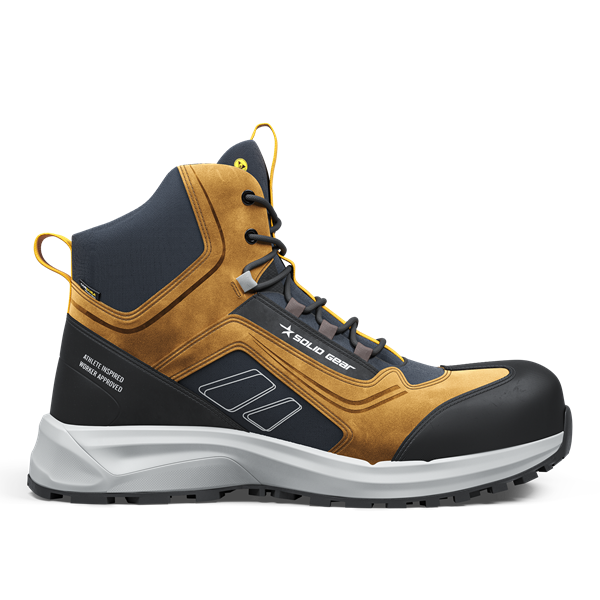
Solid Gear Adapt Mid Safety Boots
Metal-free with a fibreglass toe cap and soft nail protection, wide fit, EN ISO 20345:2022 S3L, SR, HRO, FO. Each size is a separate listing; this one is size 41, with other sizes listed separately.
View at DBR ToolsBrowse more in the safety footwear collection and check each product's exact marking, size and availability.
How to Choose the Right Safety Boots for Work
- Assess toe hazardsConfirm EN ISO 20345 and the required class.
- Check underfootLook for a suitable P, PL or PS insert.
- Match the surfaceMatch the tread to your actual floor conditions.
- Consider wet workWater-resistant uppers are not fully waterproof.
- Check the fitWidth, toe space, sole and all-day comfort.
- Verify special needsESD and metal-free are not electrical insulation.
If your employer requires protective footwear after a risk assessment, it must suit those risks, and in the UK employers must normally provide required PPE free of charge.
Frequently Asked Questions
Is composite toe as safe as steel toe?
Both can meet the same minimum 200 J impact and 15 kN compression requirements under EN ISO 20345 when certified. Neither material suits every hazard.
Are composite toe boots lighter than steel toe boots?
The cap is often lighter, but total weight varies by model, size and construction. Compare published weights and fit.
Can composite toe boots go through metal detectors?
The cap is non-metallic, but other parts of a boot may contain metal. If screening matters, choose a model described as metal-free throughout.
Do steel toe boots protect better against falling objects?
A certified steel cap and a certified non-metallic cap must both pass the same impact and compression tests. The correct footwear class and fit matter more.
Are composite toe boots waterproof?
Not simply because of the cap. Waterproofing depends on the full boot construction and certification, including any WR marking.
Do composite toe boots protect against electric shocks?
Not by default. A non-metallic cap, antistatic rating or ESD feature is not evidence of electrical insulating footwear.
Does S3L mean a composite toe cap?
No. S3L is a protection class, including a non-metallic penetration-resistant insert. It doesn't identify the toe-cap material.
Final Verdict: Steel or Composite Toe?
Choose a certified steel toe boot if you prefer traditional construction and a slim cap, and the complete model has the safety features your workplace needs. Choose a certified composite or fibreglass toe boot if you value a non-metallic cap, potentially lighter construction or less heat and cold conduction, again with the right full-boot rating. Neither wins automatically: the right EN ISO 20345 certification, your risk assessment and a comfortable fit matter most.
Check the exact size, marking and stock before ordering.
Shop safety footwear