


The right mask for airbrushing depends on what is in the paint and what you may breathe in. Airbrushing creates airborne droplets, and some coatings also release chemical vapours. A particulate-only dust mask cannot protect against solvent vapours. For some assessed painting tasks, a correctly selected respirator with combined particle and organic-vapour protection may be appropriate. Isocyanate-containing spray coatings are different: the UK Health and Safety Executive (HSE) says ordinary filtering respirators are unsuitable and air-fed breathing apparatus is required.
Airbrushing is used for models, crafts, detailed decorating, artwork and professional finishing. Because it uses a fine spray, respiratory protection needs more thought than simply picking up a disposable mask. This guide explains the main types, what the labels mean and how to make an informed purchasing decision using UK safety guidance.
Why Does Airbrushing Need Respiratory Protection?
Airbrushing generates an airborne mist of very small droplets. Depending on the coating, airborne exposure may include paint particles, solvents or other vapours, and ingredients with their own health hazards. Overspray may not be obvious under normal lighting.
Paint labelled water-based is not necessarily harmless to inhale. It can still produce fine mist, and its additives can matter. Likewise, a mask described as suitable for dust is not automatically appropriate for paint spraying. The product label and safety data sheet (SDS), together with a suitable risk assessment, determine what protection is needed.
Protective equipment also has limits. Correctly designed extraction and other exposure controls are important; a mask should not be treated as a substitute for controlling airborne contamination at its source. For workplace spraying, employers must follow relevant COSHH requirements.
What Type of Mask Is Suitable for Airbrushing?
There is no one-size-fits-all answer. The best approach is to understand the different protection categories before comparing products.
May filter airborne particles such as paint droplets. Do not stop solvent vapours.
Selected grades protect against specified organic vapours. Do not filter paint mist alone.
Combine suitable vapour and particle filter functions. Must match the exact exposure.
1. Particulate masks and filters
Particulate protection is designed for airborne particles such as dust and certain mists. Examples include filtering facepieces labelled FFP2 or FFP3, and replaceable filters marked P2 or P3 when used with compatible respirators. Their suitability still depends on the risk assessment and correct face fit.
Important limitation: These filters do not remove organic solvent vapours. An FFP2 or FFP3 rating on its own does not make a disposable mask suitable for every airbrushing paint.
2. Organic-vapour filters
Some reusable respirator systems accept gas and vapour filters marked A1 or A2, referring to specified organic vapours within the applicable filter standard. The correct grade depends on the actual contaminant and exposure assessment.
Important limitation: A gas/vapour cartridge on its own does not necessarily provide adequate filtration of paint mist. Choosing a cartridge by colour or brand alone is not enough.
3. Combined particle and vapour filters
For some lower-risk spraying applications, an appropriately selected combined gas/vapour and particulate filter may be suitable. UK HSE guidance mentions A2P3 protection as an example for certain paint spraying work, but this is not a blanket recommendation for every airbrush material or working environment.
The exact chemical, exposure conditions, protective factor, respirator compatibility and fit must all be considered. If you cannot confirm those details, seek advice from the paint supplier or a competent respiratory-protection specialist before proceeding.
4. Air-fed respiratory protection for higher-risk coatings
Never assume a cartridge or disposable filter mask can protect against isocyanate-containing sprayed coatings. The HSE specifies air-fed breathing apparatus for spraying these products, including relevant two-pack (2K) coatings. This is specialist work requiring professionally managed controls and equipment, not a situation to solve by buying a stronger ordinary filter mask.
FFP2 vs FFP3 vs P3 vs A2P3: What Do the Labels Mean?
| Label | Broad protection category | Key limitation |
|---|---|---|
| FFP2 | Disposable filtering facepiece for certain particles | Does not protect against solvent vapours |
| FFP3 | Higher-efficiency filtering facepiece for particles | Still not a chemical-vapour filter |
| P3 | High-efficiency particle filter on a compatible respirator | Does not remove gases or vapours by itself |
| A1 / A2 | Filters for specified organic vapours | Not necessarily suitable for airborne paint droplets on their own |
| A2P3 | Combination of specified vapour and particle protection | Suitability must be assessed; not for isocyanate spray coatings |
Filter markings describe types of protection, not permission to use a particular paint. Different paint formulations can create very different risks. Check the product's current certification and instructions as well as the safety data sheet for the coating.
What About Water-Based Acrylic Paints?
Water-based acrylics are common in model painting, illustration and decorative art, but a fine water-based mist can still be inhaled. Some formulations may also contain additives that change the hazard assessment.
Can You Use a Dust Mask for Solvent-Based Airbrush Paint?
No—not as protection against the solvent vapours. The HSE specifically distinguishes paint mist from organic vapours: particle filters can address some airborne droplets, but not the vapours themselves. Specialist RPE selection may be necessary, and some products or circumstances require supplied-air protection rather than an air-purifying respirator.
How to Choose an Airbrushing Respirator: Four Buying Checks
- Identify the productRead the paint label and safety data sheet.
- Identify the hazardsMist, vapours and other ingredients may all matter.
- Assess the work areaControl airborne exposure at source before relying on RPE.
- Check RPE suitabilityCorrect rating, face fit and compatible eye protection.
Check 1: What is the paint made from?
Read the label and relevant SDS information. The product type and its hazardous ingredients—not the airbrush itself—determine the hazards that need controlling. For professional use, the employer's assessment should identify the required protection.
Check 2: Are you dealing with particles, vapours or both?
A particulate mask and a gas/vapour cartridge do different jobs. Selecting a respirator without identifying the airborne contaminants can create a false sense of security.
Check 3: Are the work-area controls suitable?
The correct control strategy may include properly designed local extraction and exclusion of other people from the affected area. Respiratory PPE should be one part of a wider exposure-control plan, not the only safeguard.
Check 4: Will the respirator actually fit?
For tight-fitting RPE, face fit is essential. In UK workplaces, HSE guidance calls for competent face-fit testing. A mask that leaks around the edge cannot deliver the expected protection. Facial hair in the seal area can interfere with an effective seal; a suitable alternative may be needed.
Which Airbrushing Safety Products Does DBR Tools Sell?
DBR Tools carries a range of general safety and respiratory PPE products. However, the following confirmed items should not be presented as complete solvent-airbrushing respirator solutions.
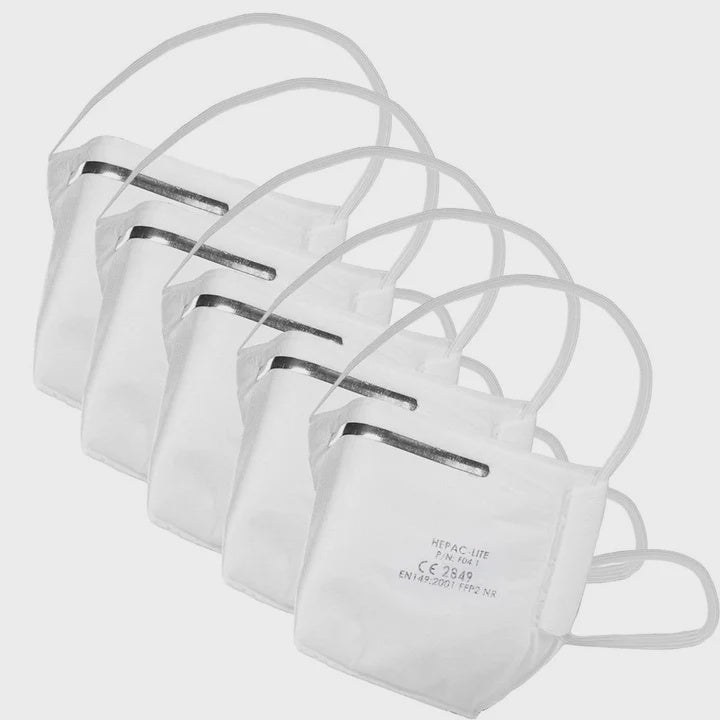
Trend FFP2 HEPAC Filter Masks (5 pack)
Particulate filtering product for certain fine dust tasks, not an organic-vapour respirator. Do not buy it expecting protection against solvent-containing airbrush coatings.
View at DBR Tools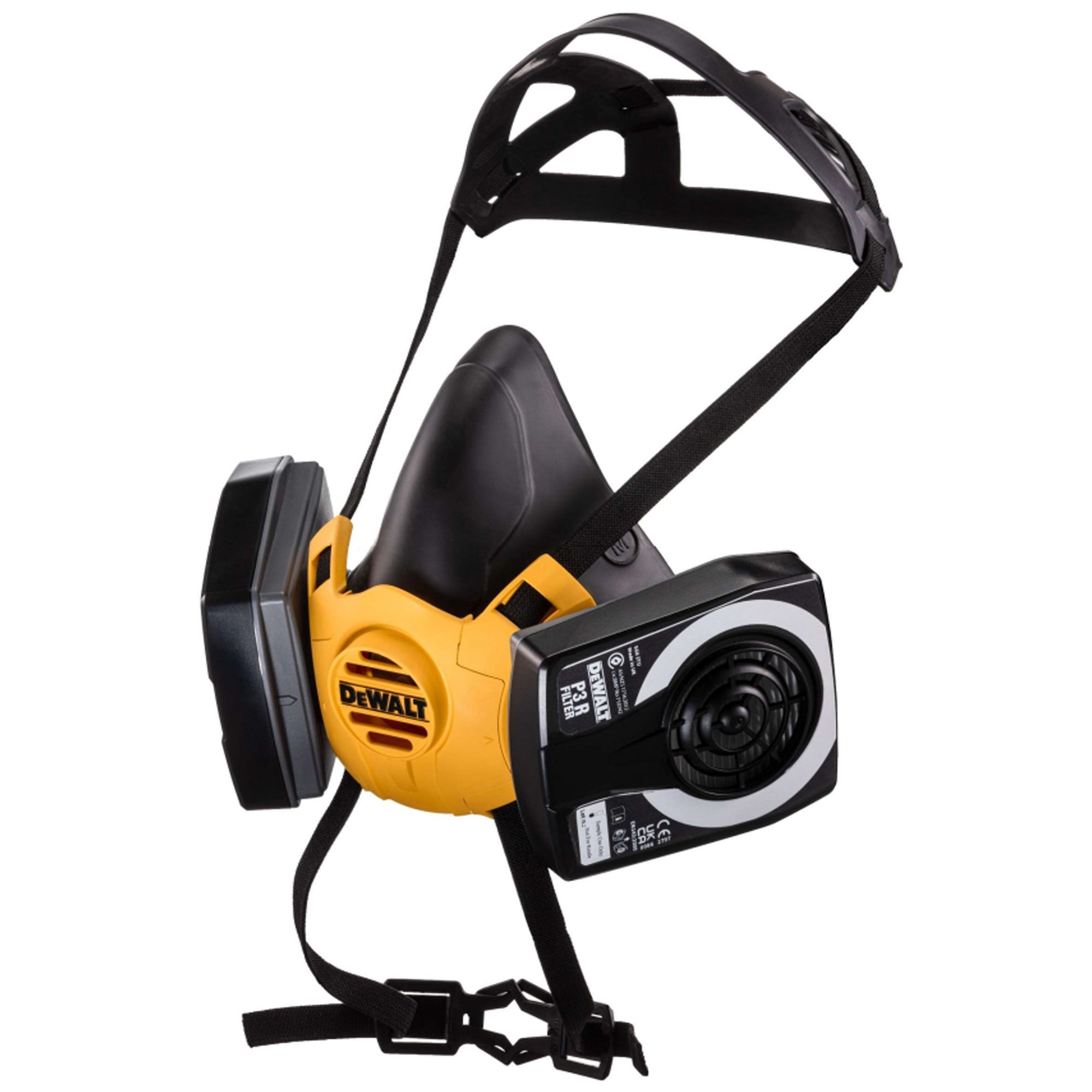
DeWalt Half Face Mask with P3 Filters
Reusable half mask supplied with two P3 particulate filters. P3 filters do not remove solvent vapours. Limited stock.
View at DBR Tools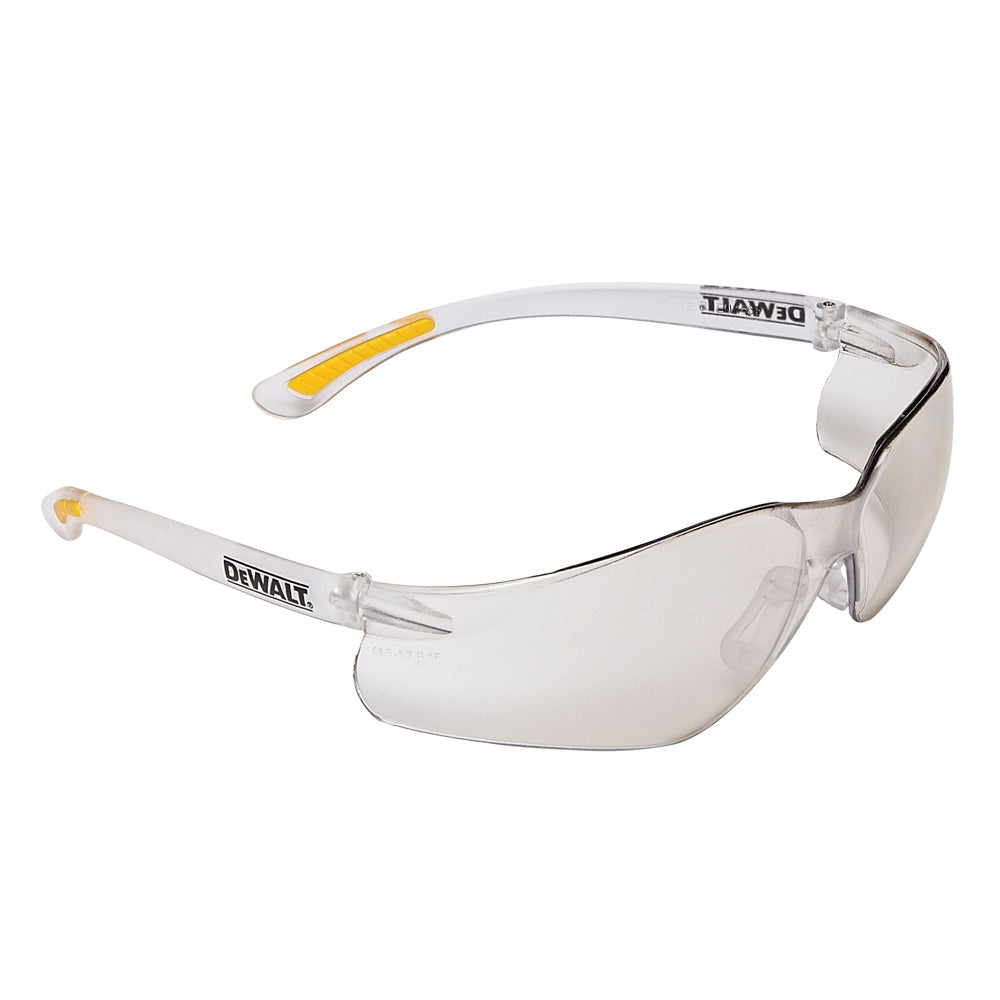
DeWalt Contractor Pro Safety Glasses
General impact eye protection. Not a substitute for respiratory protection or sealed mist protection. Limited stock.
View at DBR ToolsBuyer’s note: We have not verified a complete, suitable A2P3 airbrush respirator kit in the current DBR Tools listings. We would rather be clear about that than recommend a dust mask for the wrong exposure.
Common Airbrushing Mask Mistakes
- Assuming water-based paint is completely harmless: fine airborne droplets and additives still require consideration.
- Confusing an FFP3 or P3 particle rating with vapour protection: higher particle filtration does not make a mask suitable for solvents.
- Treating an A2P3 label as universally safe: the particular ingredients, exposure levels and conditions still matter.
- Ignoring face fit: a tight-fitting mask that leaks around the face cannot provide its intended protection.
- Relying on a respirator instead of controlling overspray: extraction and other protective measures remain important.
- Using filtering respirators for isocyanate-containing spraying: HSE explicitly says air-fed protection is required.
Why one mask does not fit every job
| Job | Hazard | What to know |
|---|---|---|
| Sanding or preparation | Dust particles | Consider suitable particulate protection. |
| Water-based airbrushing | Aerosol mist; check additives | “Water-based” does not mean risk-free. |
| Solvent-containing coatings | Mist plus possible vapours | A dust mask alone cannot filter vapours. |
| Isocyanate-containing sprays | High-risk respiratory exposure | Ordinary filtering respirators are unsuitable. |
Frequently Asked Questions
Do I need a respirator for airbrushing acrylic paint?
Potentially, yes. Water-based acrylics can generate airborne mist, and some ingredients may carry additional hazards. The right controls and RPE depend on the specific paint and exposure assessment rather than a universal rule.
Is an N95 or FFP2 mask enough for airbrushing?
Neither an N95 nor an FFP2 mask protects against solvent vapours. Their particle-filtering properties may be relevant in some assessed situations, but they are not suitable for every paint or spraying task.
Can you use a reusable half-mask respirator for airbrushing?
A reusable half-mask can be part of a properly selected RPE system for some activities, provided the appropriate filters, fit and working conditions are confirmed. It is not suitable as an ordinary filtering solution for spraying isocyanate coatings.
Do I need goggles as well as a mask?
Eye protection may be needed to address splashes or airborne exposure. It should be suitable for the specific task and compatible with any selected RPE. Standard impact-rated safety spectacles are not automatically sealed against mists.
Final Verdict: What Mask Should You Buy for Airbrushing?
The right answer is a respirator selected for the hazards in the specific coating and application, not simply the highest-rated dust mask on the shelf.
For some assessed jobs, particle filtration may be relevant. Other spraying tasks involve vapours as well, and specialist selection may be required. High-risk coatings such as isocyanate-containing spray paints demand professionally controlled work with air-fed breathing apparatus rather than ordinary filtering masks.