


A combination square has a sliding ruler and a head with 90° and 45° faces, making it versatile for measuring, checking angles and marking repeated offsets. A framing square is a larger, fixed L-shaped tool that gives a longer right-angle reference for broad boards and panels. Neither is automatically more accurate: the condition and specification of the exact product matter.
Choosing a square is easier once you separate three questions: what angle do you need, how far must the blade reach, and do you need an adjustable rule? This guide explains the differences without treating either tool as a certified precision instrument.
Combination Square vs Framing Square
Combination square
Sliding head and graduated rule
90° and 45° faces, adjustable offsets and a compact size for smaller work.
Framing square
Fixed L-shaped body
A longer fixed 90° reference for wide boards, panels and broad setting-out.
A combination square has a graduated steel rule and a head that slides along it. On a common square-head model the head gives reference faces for 90° and 45°. Many also include a small spirit vial or scriber, but those are model-specific features. The sliding head lets you repeat an offset from a straight edge or make a simple depth comparison, though the lock must hold and the faces must stay sound.
A framing square has a fixed L-shaped body with a long blade and shorter tongue at a right angle. It reaches further across large panels or long edges. Its legs don't slide, so there's no adjustable head for depth checks, and it's less compact for fine detail. Some models add angle markings, tables or scribing notches.
| Feature | Combination square | Framing square |
|---|---|---|
| Main design | Sliding head and graduated rule | Fixed L-shaped body |
| Common angle references | 90° and 45° with a standard square head | 90° between its two legs |
| Repeated offset measurement | Yes, using the adjustable head | Less convenient; no sliding head |
| Typical strength | Versatility on smaller work | Reach across wider material |
| Compact storage | Often easier | Larger overall shape |
| Accuracy | Model and condition dependent | Model and condition dependent |
| Best fit | Trim, joinery, depth and offset checks | Larger panels and broad setting-out |
Important: a combination square doesn't make every angle. A standard head gives the common 90° and 45° references. Arbitrary angles need a separately specified protractor head or another tool.
Does a Framing Square Give Better Accuracy?
Not necessarily. A fixed frame has no movable head, while a combination square offers adjustability, but neither construction proves one is more accurate. Precision depends on the manufacturer's stated tolerance, the condition of the rule and reference faces, and whether the head sits securely.
Read class markings carefully. The Stanley 2-46-028 listing mentions a class 2 rule. That shouldn't be taken as a numerical tolerance for 90° squareness unless the manufacturer states one. A damaged, bent or dirty reference face gives unreliable results on any square, so check condition before relying on it.
Which Size Should You Choose?
Easy to carry and store. Good for small work and tight spaces.
More reach for boards, trim and repeated marking.
Built for bigger layouts, but awkward in restricted spaces.
Longer doesn't automatically mean better. Match the working length to the surface, the space and the clarity of the scale, and check whether a listed size means ruler length, overall length or the legs of an L-square.
Squares at DBR Tools
One example of each size, based on published specifications and DBR Tools listings, not hands-on testing. They're different formats, so they aren't a like-for-like accuracy ranking. Stock is limited.
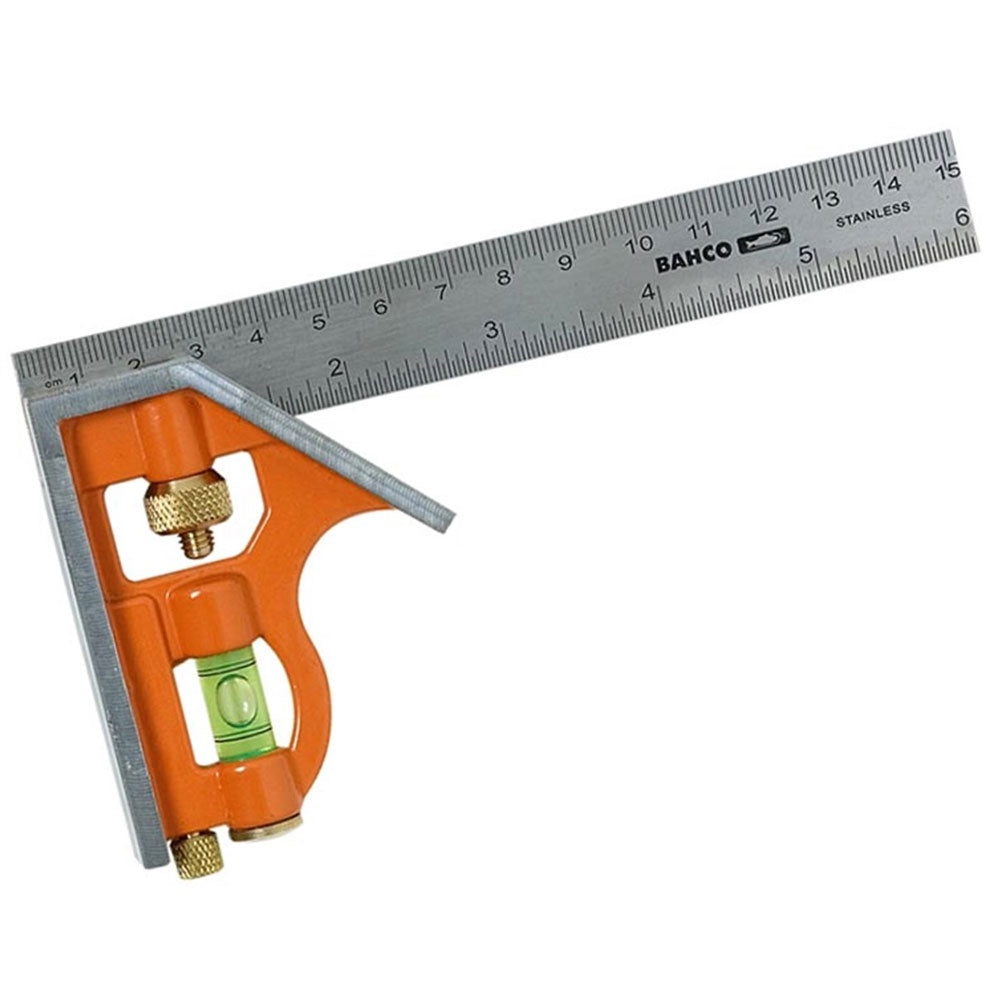
Bahco CS150 150mm Combination Square
Stainless-steel rule with metric and imperial marks, a die-cast head with 90° and 45° faces, a small level vial and a scriber. Published weight 175g. Only 1 in stock.
View at DBR Tools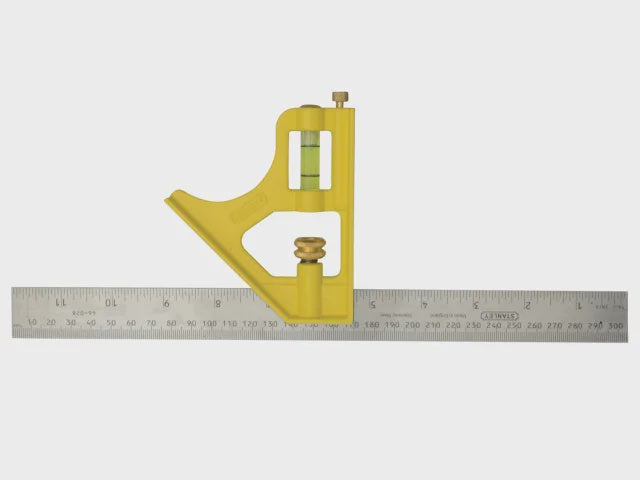
Stanley 2-46-028 300mm Combination Square
300mm/12in rule with metric and imperial graduations, a die-cast body, locking screw, vial and scriber. Described as rust-resistant coated. Only 1 in stock.
View at DBR Tools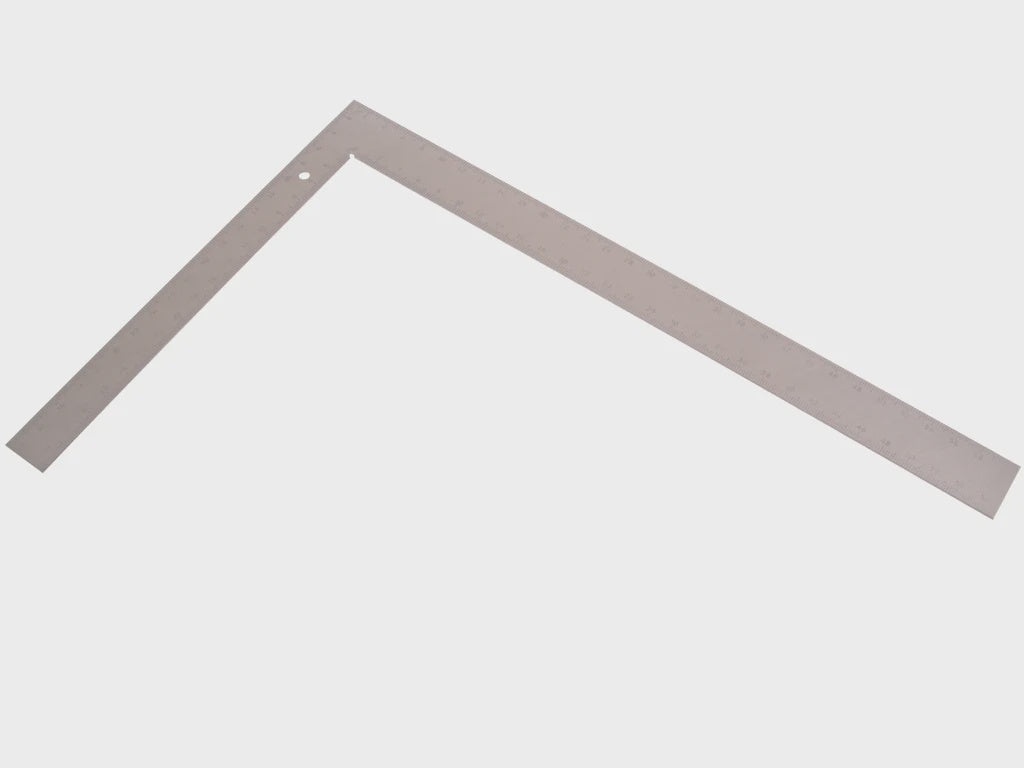
Fisher Steel Roofing Square 400 x 600mm FIS1110
A heavy-duty steel L-square, 400 x 600mm (16 x 24in), with imperial graduations on one face and metric on the other. A fixed right-angle option for broad layouts.
View at DBR ToolsBrowse more in the Hand Tools collection.
How to Choose the Right Square for Your Work
Start with the job, not the brand. If you often need a 45° reference and adjustable offsets, a combination square makes sense. For broad marking on panels or other large workpieces, a framing square may offer a better working length. For occasional DIY, portability may matter more than extra features; for repeat professional work, consistent construction and a dependable reference may justify spending more.
- The angle you need45° and 90° references, or a long 90° only?
- How far you must reachMatch the blade length to your workpiece.
- Adjustable or fixedA sliding head repeats offsets; an L-square doesn't.
- Scale and markingsClear, durable graduations in the units you use.
- Head lock and facesA secure lock and undamaged reference faces.
- Stated toleranceCheck the maker's figure instead of assuming precision.
Common Buying Mistakes
- Assuming all squares are precision-certified. Listings may give rule graduations without an angular tolerance.
- Choosing by length alone. A larger square can't replace an adjustable head.
- Ignoring reference faces. Wear or damage affects results on any brand.
- Assuming every combination square measures any angle. Ordinary heads give 45° and 90° only.
- Overlooking units. Some models are metric and imperial, others metric only.
Frequently Asked Questions
Is a combination square better than a framing square?
Neither is universally better. A combination square is more versatile for short measurements, 45° references and repeatable offsets. A framing square is more convenient for longer fixed 90° references.
Can a combination square check 45 degrees?
A standard combination-square head commonly has a 45° reference face as well as a 90° face. Confirm this for the exact model.
What is a framing square used for?
It's a fixed L-shaped measuring and marking tool for larger 90° layouts and for checking longer edges or broad workpieces.
Is a 300mm combination square a good all-round size?
It can be a useful compromise between compactness and reach. A 150mm model is handier in tight spots, while a larger framing square works better on wide surfaces.
Does a bubble vial make a combination square a precision level?
No. A vial doesn't establish levelling accuracy. Treat it as an extra feature and check the product's published performance.
Which is best for a beginner's toolkit?
For general measuring and marking, a well-made combination square is a versatile start. Someone mainly working with large sheets may benefit more from a framing square. It depends on your projects and workspace.
Final Verdict
Choose a combination square for an adjustable rule, a compact measuring tool and common 90° and 45° references. Choose a framing square for a longer, fixed right-angle tool for broader material. Both earn a place in a workshop, but neither should be bought on an unverified accuracy claim.
Compare sizes and formats, and check stock before ordering.
Shop hand tools