


Choose a one-handed quick-release clamp for convenient adjustment and frequent repositioning. A screw or parallel-jaw clamp gives more deliberate tightening for larger, carefully aligned assemblies. A spring clamp is compact and handy for temporary, lighter holding. No design is universally best: it depends on the workpiece, opening, contact surfaces and the exact model's rating.
Clamps hold work in position while you get on with the job, but buying one isn't just a matter of picking the longest bar or strongest-looking frame. A small spring clamp and a large parallel-jaw clamp do very different jobs, and two clamps with the same opening can differ in reach, pads and mechanism. This guide compares the main types and three real examples, using published product information, not hands-on testing.
Quick-Release vs Screw vs Spring Clamps at a Glance
Quick-release or trigger action. Convenient for frequent repositioning.
Threaded, deliberate tightening. Suits larger, aligned assemblies.
Compact and simple. For small, lightweight, temporary holding.
| Feature | Quick-release / one-handed | Screw / parallel-jaw | Spring |
|---|---|---|---|
| Typical adjustment | Trigger, pump or release lever | Threaded handle or spindle | Squeeze handles |
| Main advantage | Convenient repositioning | Controlled adjustment; some designs have parallel pads | Compact, simple temporary grip |
| Typical use | General assembly and positioning | Panels, larger assemblies and alignment | Small and lightweight holding |
| Force | Depends on model | Depends on model | Depends on spring and size |
| Key specification | Opening, throat depth, rated force | Opening, jaw alignment, rated force | Opening, throat depth, spring force |
Important: these are broad categories. A one-handed clamp can have a high stated force, and a parallel-jaw model isn't automatically best for every material. Compare the exact product.
The Three Clamp Types Explained
Quick-release or one-handed clamps
A handle or trigger adjusts the moving jaw without the repeated turning of a screw clamp, which suits work where the holding position changes often. Mechanisms differ: some use a trigger squeeze, others a pump action. Some models convert from clamping to spreading, but don't assume that unless it's listed for the exact product. The Irwin QUICK-GRIP Xtreme Pressure is an example, sold in sizes from 150mm to 900mm. Its opening and spreading function matter more than comparing its force with a different clamp design.
Screw and parallel-jaw clamps
A screw clamp adjusts pressure with a threaded spindle or handle, which allows deliberate control where alignment and contact pressure matter. A parallel-jaw clamp is more specific: its large opposing faces are meant to stay parallel, which suits cabinetmaking and panel work. Not every F-clamp or screw clamp has parallel jaws. The Bessey K Body REVO KR60-2K (600mm) is the example here. Be careful with suffixes: newer KRE and earlier KR products shouldn't automatically share the same maximum force or features, so check the datasheet for the exact model if you need a precise figure.
Spring clamps
A spring clamp keeps its jaws closed with spring tension: squeeze the handles to open, release to grip. It's compact and useful for temporary, lighter holding, but available force and opening depend on the model, and it isn't a substitute for clamps specified for larger or higher-load assemblies. Bessey's data identifies the XM5EU as a steel spring clamp with a 50mm opening, 57mm throat depth and up to 120N clamping force. Its plastic caps help reduce marking on suitable surfaces, though delicate finishes should still be checked.
Clamps at DBR Tools
One example of each type. Stock is limited, so check the listing before ordering.
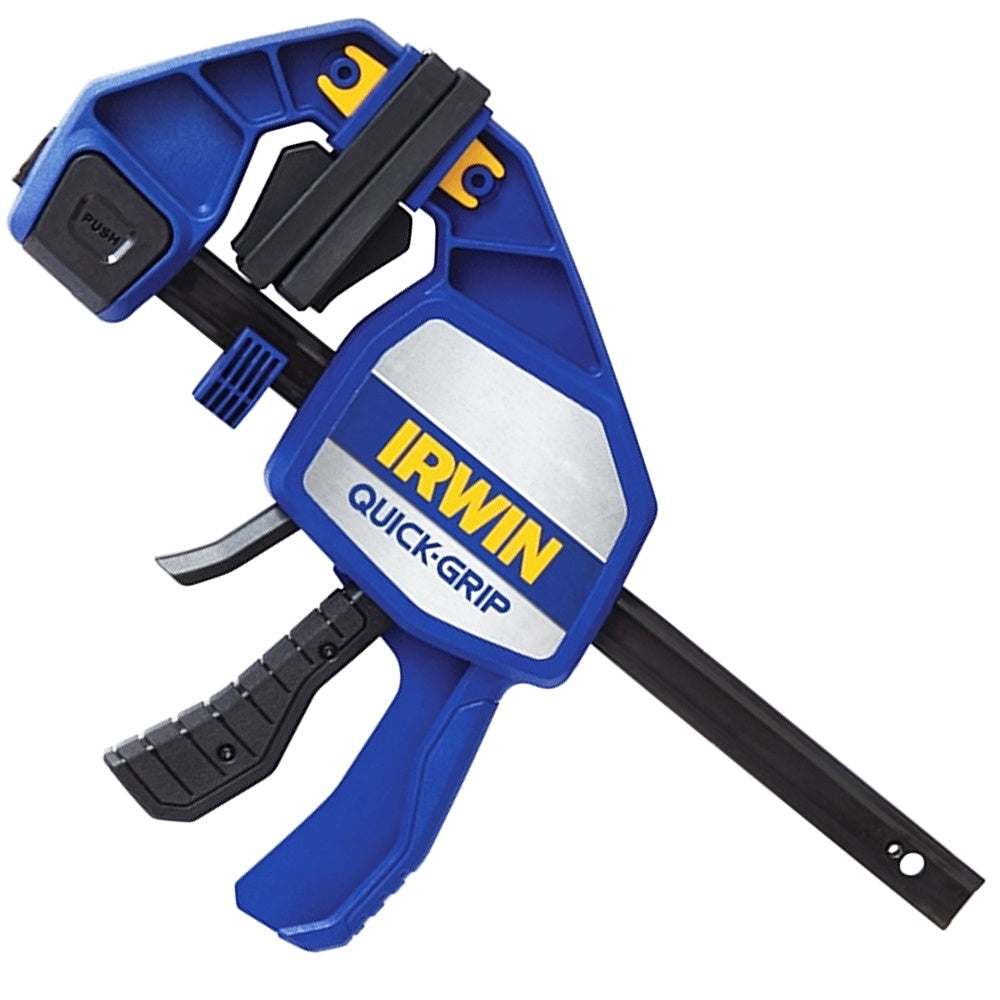
Irwin QUICK-GRIP Xtreme Pressure One-Handed Clamp
A one-handed bar clamp listed in four sizes, from 150mm (6in) to 900mm (36in). Check the listing for the exact size and whether it can spread.
View at DBR Tools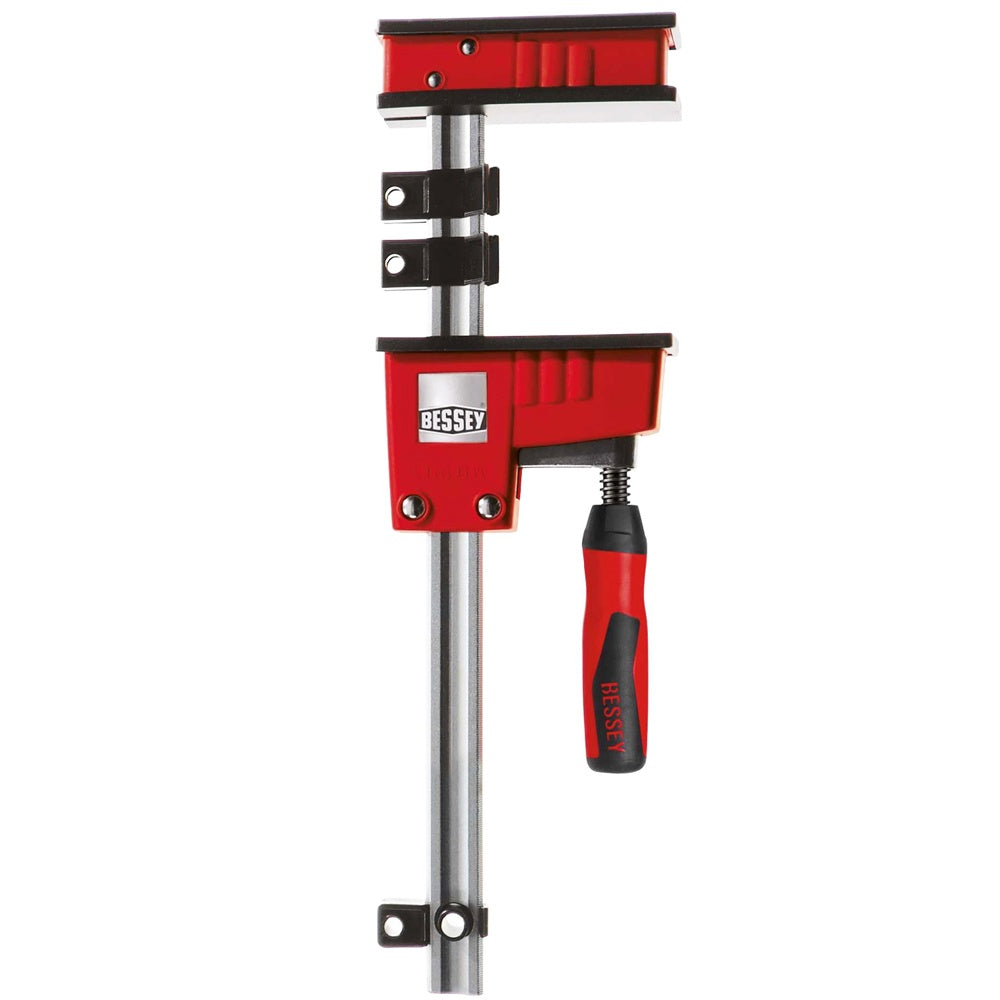
Bessey K Body REVO Clamp 600mm KR60-2K
A 600mm parallel-jaw screw clamp with broad contact faces, relevant for larger panel and cabinet assemblies. Only 1 in stock.
View at DBR Tools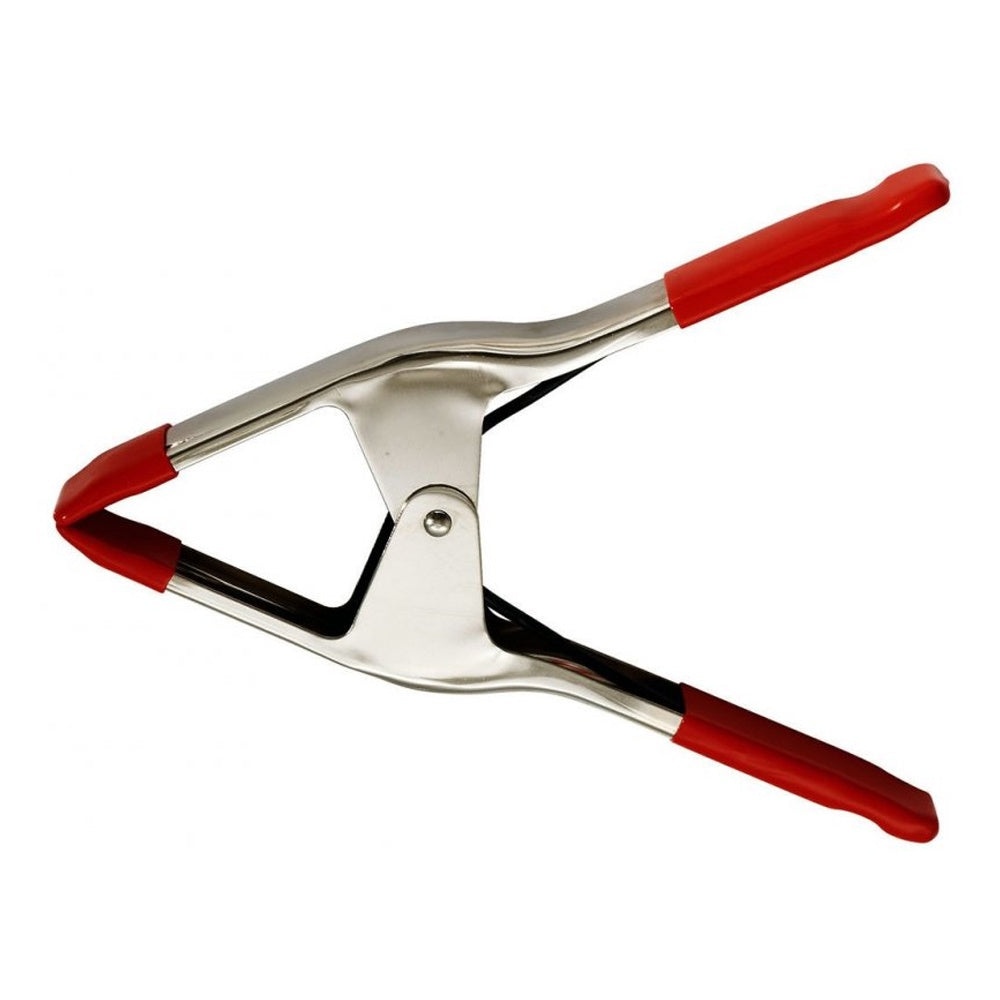
Bessey XM5EU 50mm Steel Spring Clamp
A steel spring clamp with a 50mm opening, 57mm throat depth and up to 120N clamping force, with plastic protective caps. Only 1 in stock.
View at DBR ToolsBrowse more in the Clamps collection.
Understanding Opening, Throat Depth and Holding Force
How far the jaws separate. A 50mm spring clamp and a 600mm bar clamp aren't interchangeable.
How far the contact point reaches in from the bar or frame. Matters away from an edge.
A model-specific figure, in newtons or kgf. A stated maximum isn't right for every material.
Where model data is unclear, the safest conclusion is not specified, rather than guessing from the size or look of the tool. Manufacturers may quote force in newtons or kilogram-force, so compare under the stated test conditions for the exact model.
Which Clamp Type Is Best for Different Projects?
- Furniture assembly and positioning: a quick-release clamp is convenient for briefly holding boards you adjust often. Check pads, opening and throat depth.
- Larger panels and cabinets: a suitably sized screw or parallel-jaw clamp, where contact surfaces and deliberate adjustment matter. Jaw design matters as much as bar length.
- Light holding and craft work: spring clamps suit small temporary jobs, but are usually unsuitable for larger structures or specified holding forces.
- Easily marked surfaces: look for protective pads, broad faces and controllable adjustment. Even padded clamps can mark delicate material.
- Frequent repositioning: trigger or quick-release. Choose a screw mechanism when fine, gradual adjustment matters more.
What to Check Before Buying a Clamp
- The taskDecide what you are holding and for how long.
- OpeningCheck it covers your workpiece.
- Throat depthMake sure it reaches where you need to clamp.
- Operation typeTrigger, screw or spring, and whether it can spread.
- Stated forceCompare the exact model's rated figure.
- Contact padsCheck they suit the material and finish.
For storage and everyday convenience, compact clamps are easier to carry, while long-bar and parallel-jaw designs may need dedicated workshop space. The trade-off is between reach, control and convenience, not which clamp looks strongest.
Common Mistakes When Comparing Clamps
- Choosing only by bar length. Opening doesn't tell you throat depth or contact surface.
- Assuming all one-handed clamps have the same force.
- Treating every screw clamp as a parallel clamp.
- Ignoring surface protection.
- Assuming every model can spread.
- Comparing force units casually.
Frequently Asked Questions
Are quick-release clamps as strong as screw clamps?
Some quick-release models have substantial published holding-force ratings, while some screw clamps are designed for controlled or higher-force work. The design name can't establish strength, so compare rated figures for the exact models.
Are F-clamps and parallel-jaw clamps the same?
Not necessarily. F-clamp describes a familiar bar-and-jaw form, while parallel-jaw clamps aim to keep large opposing contact faces parallel. There's overlap, but the terms aren't interchangeable for every product.
What does a 600mm clamp mean?
It generally refers to the nominal clamping opening or capacity, not the throat depth. Check the listing to see how the manufacturer defines the measurement.
Do spring clamps damage wood?
They can mark some finishes or softer materials. Protective tips help, but suitability depends on the surface, contact area and force.
Is a larger clamp always better?
No. A larger clamp gives more reach but can be less convenient for small objects or confined spaces. Match the tool to the job instead of maximising one dimension.
Should I buy a clamp with a spreading function?
Only if that function matters for your tasks. Not every quick-release or screw clamp has reversible jaws, so confirm the specific model's features.
Final Verdict: Which Clamp Should You Choose?
Choose a quick-release clamp when fast adjustment is the priority, a screw or parallel-jaw clamp when controlled contact and larger assemblies matter, and a spring clamp for suitable small, lightweight jobs. Compare the exact opening, throat depth, pads and manufacturer ratings. The right clamp suits your workpiece, not simply the largest or most expensive option.
Check opening, throat depth and stock before ordering.
Shop clamps