


Impact-rated screwdriver bits are made for the repeated rotational shocks of an impact driver. They often use modified steel, heat treatment and a flexible torsion zone to reduce stress at the tip. Regular bits can suit hand screwdrivers and ordinary drill drivers, but a 1/4-inch hex fitting alone does not mean a bit is impact-rated.
Choosing a screwdriver bit is about more than matching a screw size. It has to suit both the screw-head profile and the tool's drive mechanism. This guide explains the differences, why impact-rated designs can last longer in demanding fastening, and which packs suit which needs. It's based on published manufacturer specifications, not hands-on testing.
Impact Driver Bits vs Regular Bits: Quick Comparison
Impact-rated bits
Designed for repeated rotational impact loads
Often use treated steel and a torsion zone. Select by the maker's impact rating and your holder, in the correct PH, PZ, Torx or hex size.
Regular bits
Hand drivers and conventional drill drivers
Steel and heat treatment vary by maker. A fitting shank does not certify impact suitability. Choose quality bits matched to your fasteners.
| Feature | Impact-rated bits | Regular bits |
|---|---|---|
| Intended use | Torque pulses from compatible impact drivers; often drill drivers too | Hand screwdrivers and suitable conventional drill drivers |
| Construction | Often engineered steel, specific heat treatment and a torsion feature | Varies by product; may lack an impact-specific torsion feature |
| Durability | Designed to reduce breakage under impact loading | Don't assume suitability for impact loading |
| Tip types | PH, PZ, Torx, hex and slotted | The same common profiles |
| Typical fit | Many use a 1/4-inch hex shank, subject to holder | Many also use 1/4-inch hex |
| Buying rule | Check the maker's impact-rated designation | Check the maker and intended tool, not appearance |
Key point: a bit can physically fit a tool yet be unsuitable for its loading. And an impact-rated bit isn't automatically better for small or delicate screws: accurate tip fit and the right tool still matter.
What Are Impact Driver Bits, and How Do They Differ?
An impact driver adds short bursts of rotational force when resistance rises, unlike a drill driver's smooth output. Those pulses stress the bit, holder and screw head. Makers respond differently: Milwaukee's SHOCKWAVE IMPACT DUTY range uses treated steel and a flexing SHOCK ZONE, DeWalt's FLEXTORQ uses an optimised torsion section, and Bosch's PRO Impact bits use heat-treated steel with extended torsion zones. Those are design features, not a promise a bit can't break.
A torsion zone is an engineered section that twists slightly under load to manage torque peaks instead of passing all the stress to the tip. Not every narrow section proves an impact-rated design, so rely on the maker's published designation.
Regular bits aren't universally weak, and may perform well within their intended use. The point is that ordinary bits shouldn't be assumed to withstand impact loading unless the maker says so. If you mainly use a hand screwdriver or drill driver, a quality standard assortment may be sensible; for an impact driver, start with an explicitly impact-rated range.
Can You Use Impact Driver Bits in a Regular Drill?
Yes, where the fitting is compatible and the maker permits it. Bosch, for example, lists its 1/4-inch hex PRO Impact bits for both impact screwdrivers and rotary drill drivers. That makes an impact-rated mixed set practical if you own both tools, but check the shank, the holder and the manufacturer's requirements. The reverse isn't reliable: a normal 1/4-inch hex bit may fit an impact driver, but a matching shank doesn't certify it for impacts.
Which Bit Do You Need: PH, PZ or Torx?
Tip fit matters as much as impact rating. A premium impact bit with the wrong profile can still damage a fastener.
Common cross-head profile. Example: PH2.
Distinct cross-head geometry. Example: PZ2.
Six-lobed profile. Example: TX20.
| Marking | Profile | What to check |
|---|---|---|
| PH2 | Phillips | Screw head is Phillips, size 2 |
| PZ2 | Pozidriv | Screw head is Pozidriv, size 2 |
| TX20 / T20 | Torx | Matching six-lobe Torx 20 |
| H4 / HEX4 | Hexagonal socket | Compatible 4 mm internal hex |
Phillips and Pozidriv can look alike but are different profiles, so a PH2 bit is not a substitute for PZ2, even though both are size 2 cross-heads. Torx has a six-lobed profile (sizes such as T20 and T25) that engages positively, but correct size and quality still matter.
25mm vs 50mm Screwdriver Bits: Does Length Matter?
25 mm bits are compact inserts often used with a compatible magnetic or quick-change holder. 50 mm bits give a different reach and may suit a compatible holder. Longer specialty bits help in some access situations, but length alone doesn't determine strength or impact suitability. A magnetic holder helps retain a bit but doesn't make a non-impact bit suitable for an impact driver, and a holder used with impacts should itself be rated for them.
Impact Bit Sets at DBR Tools
Ask: which profiles do you need, is the bit impact-rated, do size and length fit, and do you want a mixed set or a refill of one profile?
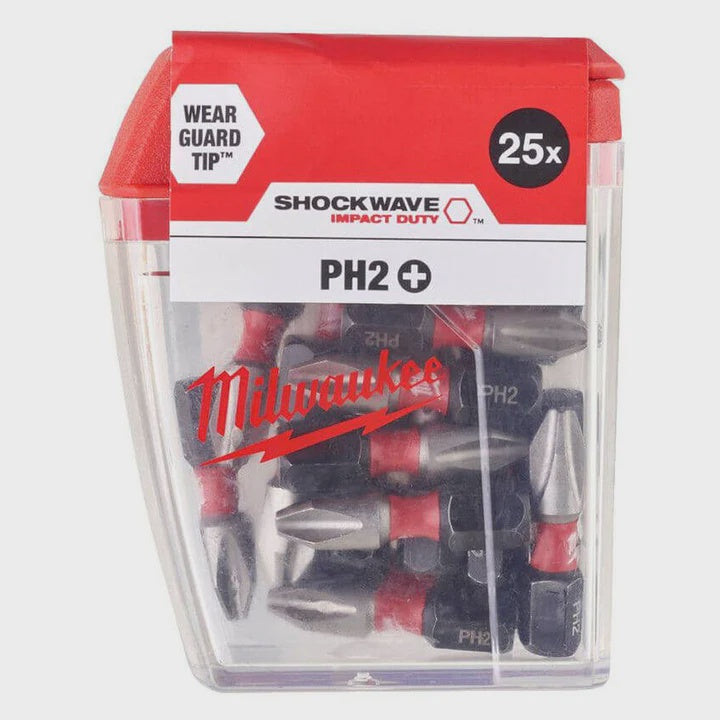
Milwaukee SHOCKWAVE PH2 25mm, 25-Piece
Single-profile impact-duty refill pack for PH2 fasteners. Milwaukee specifies its flexible SHOCK ZONE design. 4932472037.
View at DBR Tools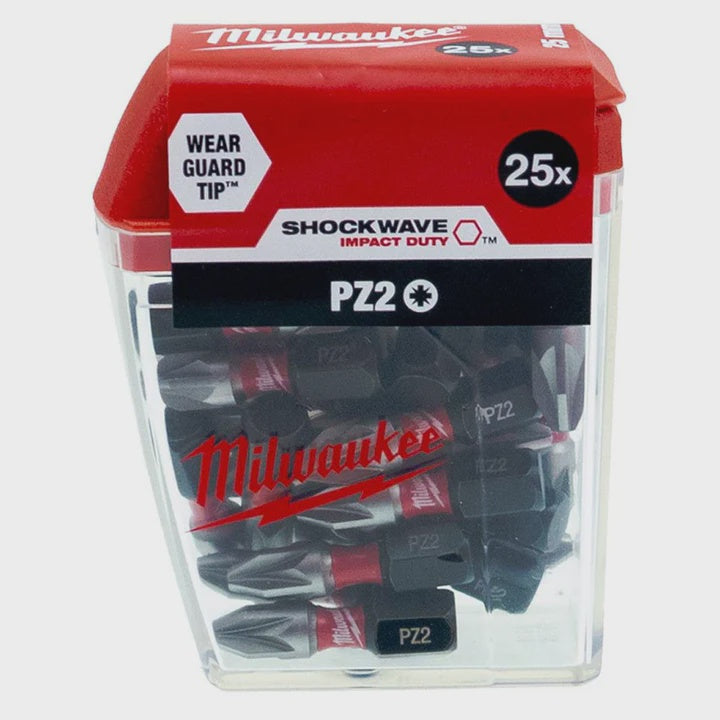
Milwaukee SHOCKWAVE PZ2 25mm, 25-Piece
Impact-duty refill pack for Pozidriv size 2 fasteners. Check the part number on the product page.
View at DBR Tools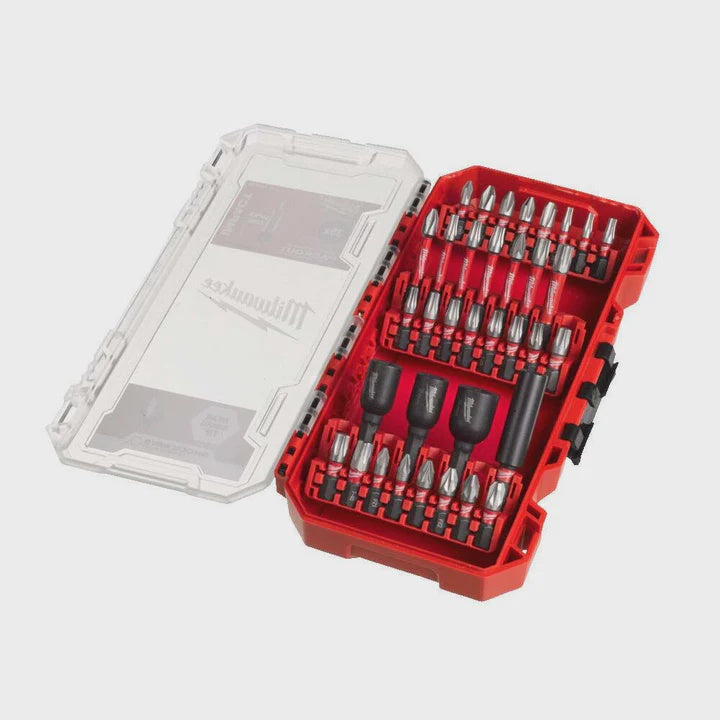
Milwaukee SHOCKWAVE 35-Piece Impact Set
A broader mix of PH, PZ and TX bits with a magnetic bit holder. Check the exact case contents. 4932492003.
View at DBR Tools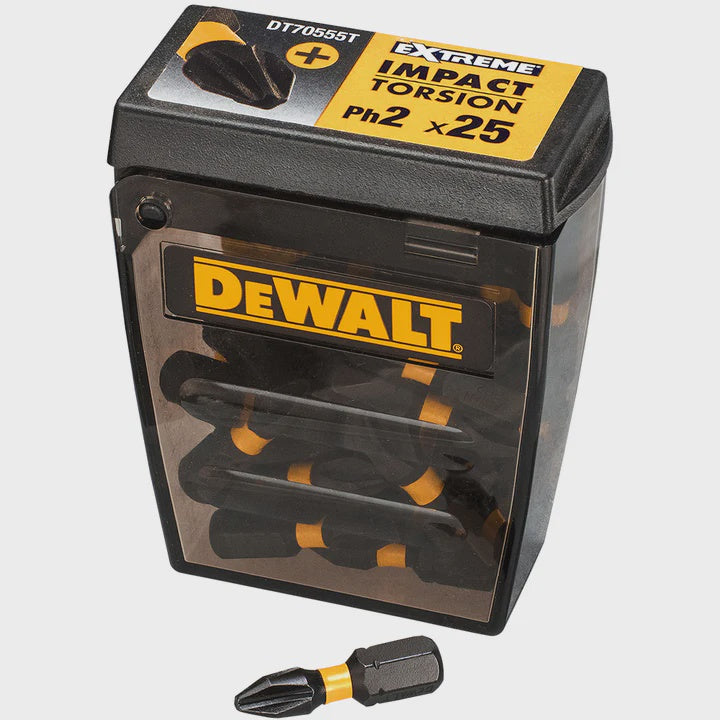
DeWalt DT70555T PH2 Impact Torsion Bits, 25mm
DeWalt describes a 15 degree torsion zone that lets the bit flex rather than break, and a full-fit head to resist cam-out.
View at DBR ToolsThe first two are single-profile refill packs, not general assortments: choose them only if your fasteners use that profile. The 35-piece set is more flexible if fasteners vary, but bit-set configurations can differ between product codes, so check the contents. Browse more in Screwdriver Bits & Holders.
What to Check Before Buying
- Tool approvalDoes the maker expressly rate the bit for impact use, if needed?
- Bit profileMatch PH, PZ, Torx, hex or slotted type and size.
- Shank and holderCheck 1/4-inch hex or other fitting compatibility.
- Bit lengthChoose the bit and holder configuration you need.
- Pack contentsMixed set, or a refill pack of one common tip?
- Genuine productCheck markings, product code, condition and supplier.
A good listing states the profiles, lengths, pack count, part number and impact suitability clearly. That's more useful than an unsupported claim that a bit is the strongest.
Common Misunderstandings About Screwdriver Bits
- All black or coloured bits are impact-rated: not necessarily. Colour and finish aren't proof.
- Any 1/4-inch hex bit is safe for an impact driver: no. Physical fit is separate from impact engineering.
- Impact-rated bits can't break: false. Torsion zones improve resilience under their design conditions, but damage is still possible.
- Phillips and Pozidriv are interchangeable: no. Even if one seems to engage, the fit is wrong and can damage the fastener.
- A 50mm bit is always better than 25mm: no. Length is about holder compatibility and reach, not quality.
Frequently Asked Questions
Are impact driver bits stronger than normal screwdriver bits?
They're engineered for the repeated impacts of an impact driver, often with different steel treatments or flexible torsion sections. That doesn't make every impact-rated bit better for every job: correct fit and quality still matter.
Can I use impact-rated bits with a hand screwdriver?
Generally yes, if the screwdriver accepts the bit's shank and the manufacturer permits it. Impact rating doesn't prevent compatible non-impact use.
Can I use regular screwdriver bits with an impact driver?
Don't assume so just because they fit. For impact drivers, choose bits the manufacturer explicitly rates for that tool type.
What is a torsion bit?
A bit with a section designed to flex slightly under torque and manage sudden loads. Construction varies by maker, so check whether it is also specifically impact-rated.
Do I need PH2 or PZ2?
They're different cross-head systems. Choose the profile and size marked for the fastener rather than treating them as alternatives.
Are magnetic bit holders impact-rated?
Some are and some aren't. Check the holder maker's guidance: magnetism alone doesn't establish suitability for impact loading.
Final Verdict: Which Screwdriver Bits Should You Buy?
If you're choosing accessories for an impact driver, prioritise manufacturer-confirmed impact-rated bits in the exact profiles your fasteners need. A single-profile pack suits repetitive PH2 or PZ2 work, while a mixed SHOCKWAVE set covers a wider range. If you mainly use a hand screwdriver or conventional drill driver, a quality regular set may be perfectly adequate. The better purchase fits the tool, the screw head and the workload, not just the priciest box.
Check stock, profiles and pack contents before ordering.
Shop screwdriver bits