


A lower sandpaper grit number means a coarser abrasive; a higher number means finer. P80 suits rougher preparation, P120 general smoothing, P180 refining bare timber, and P240 or finer selected finishing and between-coat jobs. Where you stop depends on the surface and the paint, stain or coating you'll apply.
Sandpaper looks simple until you meet rolls, sheets, mesh and discs marked P40, P80, P120, P180 or P240. The wrong grit can leave visible scratches, remove more than intended or slow a finishing job. This guide explains the numbers, which ranges suit typical jobs and how to match an abrasive to your sander.
What Do Sandpaper Grit Numbers Mean?
The grit number is a size classification of the abrasive particles. Lower numbers have larger particles and usually remove material more aggressively; higher numbers leave a finer scratch pattern. In the UK many coated abrasives carry a P before the number, such as P120, meaning the FEPA P scale. It isn't a direct count of grains per square inch, and different grading systems aren't always identical.
P80 is coarser than P120, and P120 coarser than P180, but the finish also depends on the grain, backing, coating, workpiece and the abrasive's condition.
| Grit | Role | Typical application |
|---|---|---|
| P40–P60 | Coarse, high removal | Heavy surface levelling or stripping |
| P80 | Medium-coarse, strong removal | Rough timber and obvious surface marks |
| P120 | Medium, moderate removal | General smoothing and preparation |
| P150–P180 | Fine, gentle removal | Refining bare timber before many finishes |
| P220–P240 | Very fine, light removal | Light scuffing where the finish allows |
| P320+ | Extra fine, very light removal | Selected between-coat or fine finishing |
These are practical ranges, not universal prescriptions. Norton and Mirka both publish selection advice that varies with surface and stage, so always follow the coating manufacturer's preparation instructions.
Which Sandpaper Grit Should You Use for Wood?
For bare timber, the surface condition matters more than finding one best number. Rough stock may need a coarser start; smooth planed timber may need only a finer stage. P80 is often a starting point for visible machining marks. P120 is a versatile general grade, either a start for clean timber or the step after P80. P180 refines medium-grit marks and may be a reasonable stopping point before finishing. P240 suits delicate surfaces or light smoothing between cured coats, but is not automatically better than P180, because some oils, stains and primers need a particular surface profile.
Remove obvious marks.
Refine the previous marks.
A common finishing stage.
Only when finish guidance allows.
For rough bare timber an illustrative sequence is P80, P120, P180, with P240 if the coating guidance calls for it. If the wood is already smooth, start at P120 to avoid removing more than needed. Each stage should refine the marks of the one before; jumping from very coarse to ultra-fine can leave scratches behind.
What Grit Is Best for Paint Preparation?
Preparing a sound coating to accept another layer is different from dealing with worn or damaged material. For light preparation between coats, makers often suggest a fine abrasive such as P240 or P320, but the paint system's instructions decide. For uneven surfaces or filler, a medium grade may come first, then finer grades as the system permits. Sound coatings may only need cleaning and a key, not stripping.
Old paint. If an older coating could contain lead or another hazardous substance, don't disturb it until the material and the right controls have been assessed. Sanding creates hazardous airborne dust.
What Sandpaper Grit Is Suitable for Metal?
Metalwork depends on both the abrasive material and the grit. Aluminium oxide, zirconia and ceramic grains come in different products, and not every abrasive suits every metal. Coarser grades remove more, finer grades refine or prepare for coating. For corrosion removal, coated metal or precision parts, follow the maker's recommendation rather than a generic grit number.
Sanding Sheets vs Discs vs Mesh
Grit is only part of the decision: the abrasive must also match how it attaches and the surface you're preparing.
For hand sanding or compatible sanding blocks.
Check diameter, hole pattern and attachment system.
Match the pad and extraction system specified by the maker.
A 150 mm disc isn't interchangeable with a 125 mm disc just because both are round, and dust-extraction holes need to suit the tool and backing pad. Net-backed abrasives allow extraction through the surface when used with a compatible system, but abrasive, pad and extractor still have to match.
Sanding Discs at DBR Tools
These are examples of building a compatible grit range, not the result of hands-on testing.
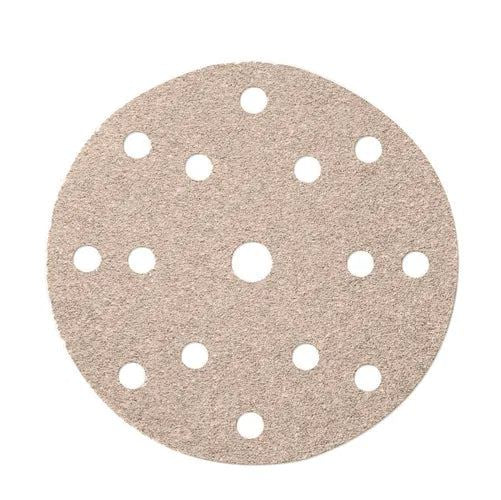
Mirka Basecut 150mm Hook & Loop 15-Hole Discs
One listing covering P40 to P320: P40 and P60 in packs of 50, P80 to P320 in packs of 100. Suited to wood, paint stripping, filler and more. Check your pad's hole pattern.
View at DBR Tools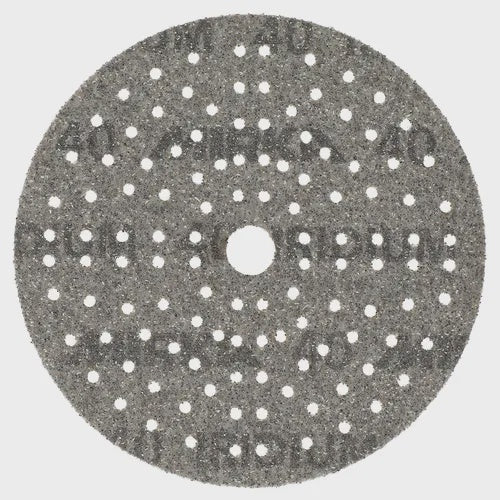
Mirka IRIDIUM 150mm 121-Hole Discs, P240
Pack of 100 paper discs with ceramic and aluminium oxide grain, for a finer stage. 121-hole pattern, so check it matches your pad.
View at DBR Tools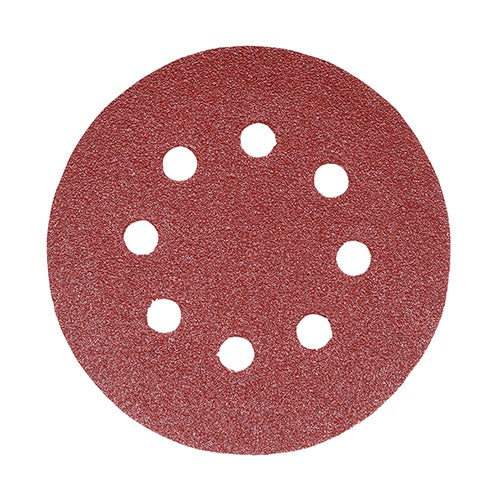
Timco Random Orbital Discs, 150mm P180
Pack of 5 hook-and-loop discs with aluminium oxide grain, in the 150mm P180 listing. The other sizes and grits are listed separately.
View at DBR ToolsA pack with the right grit is only a good buy when its diameter, hole layout and backing also suit your sander. Browse more in Sanding Accessories.
Six Common Sandpaper Buying Mistakes
- Starting too coarse: deep scratches on an already smooth surface.
- Skipping too many grades: fine paper may not remove the marks of a much coarser one.
- Assuming finer is always better: stains, oils and primers can need specific preparation.
- Ignoring the format: a disc, sheet and mesh strip aren't substitutes just because they share a grit.
- Overlooking extraction compatibility: hole layouts and backing systems affect dust collection.
- Reusing clogged or worn abrasives: performance and scratch consistency change as they deteriorate.
Dust. HSE recommends controlling wood dust at source, including on-tool extraction for powered sanding, and choosing respiratory protection from your exposure assessment. Respiratory protection doesn't replace extraction. See HSE guidance on sanding wood.
Frequently Asked Questions
Is P120 sandpaper finer than P80?
Yes. On the same FEPA P scale, P120 has finer abrasive particles than P80 and generally leaves a less aggressive scratch pattern.
Is P180 or P240 better for wood?
It depends on the wood and the planned finish. P180 is a common fine-preparation grade; P240 can suit a finer stage where the coating instructions allow. Higher grit isn't always better for stain absorption or adhesion.
What grit should I use before painting?
Follow the paint maker's surface-preparation guidance. A sound existing coating may only need a fine key, while rough or repaired areas need a different sequence.
What is the difference between sandpaper and sanding discs?
Both are coated abrasives. Sandpaper is the broad term; discs are a specific shape and backing for compatible tools. Check disc size and hole pattern, not just grit.
Can I use the same sanding disc on different sanders?
Only where the diameter, backing, extraction-hole layout and maker's compatibility all match.
What does the P stand for in P80 or P240?
The FEPA P grading system used on many coated abrasives. It identifies particle-size grade and isn't a direct grit count per square inch.
Final Verdict: Choose the Grit for the Surface and Finish
For many DIY and trade jobs, P80, P120 and P180 cover the stages from rougher preparation to refined smoothing, and P240 or P320 help where the coating calls for it. Match grit, format, backing and material compatibility rather than buying by grit alone, and check the instructions for powered sanders and specialist finishes.
Check disc size, hole pattern and stock before ordering.
Shop sanding accessories