


Choose a toolbox for rigid, enclosed storage of mixed tools; a tool bag or open tote when portability and quick access matter most; and a parts organiser to separate screws, fixings and bits. For many UK DIYers and tradespeople the most practical setup pairs a toolbox or tote with a compact organiser.
Good storage isn't just somewhere to put tools. A poorly matched case makes accessories hard to find, awkward to carry or exposed to rain and debris, while an oversized toolbox is a nuisance when you only need a few hand tools. This guide compares toolboxes, bags, open totes and organisers, and which features are worth paying for.
Toolbox vs Tool Bag vs Organiser: At a Glance
Better structure and stacking, and protects larger mixed tools. Check seals and latches.
Flexible pockets for hand tools and easy to carry between jobs. Not automatically waterproof.
Separates fixings and fittings with easy-to-check contents. Check bin seals and system fit.
| Feature | Rigid toolbox | Tool bag or tote | Parts organiser |
|---|---|---|---|
| Main strength | Enclosed storage and structure | Portability and convenient access | Sorting small components |
| Typical contents | Hand tools, equipment, selected accessories | Frequently used hand tools and accessories | Screws, fittings, bits and fixings |
| Internal layout | Open space, trays or drawers | Pockets and flexible compartments | Divided bins or adjustable sections |
| Weather protection | Varies by seals and model | Varies; some have water-resistant bases or fabrics | Some sealed models carry an IP rating |
| Best buying question | Will everything fit securely? | Is it comfortable to carry? | Will small parts stay separated? |
No format is universally better. It depends on your tools, how far you carry them and whether you need to find small components quickly.
When Is a Toolbox the Best Choice?
A hard-sided toolbox suits a rigid container for an assortment of tools. It keeps its shape, some modular models connect securely to matching boxes, deeper ones take bulkier items, and lids and latches keep contents together, though they don't automatically make a box weatherproof. The downside is access: a deep box without trays can become a jumble, and its own weight matters if you carry it often.
When Should You Choose a Tool Bag or Open Tote?
Bags suit moving between rooms, vehicles and sites, with tools arranged in pockets inside and out. An open tote keeps its main compartment open at the top, which is quick to access but gives less protection from dirt and rain. Look at the carrying options, base and pocket arrangement: a comfortable handle and strap can matter more than an extra pocket, and a rigid base helps the bag stand and avoids wet floors. But a waterproof base doesn't make the whole bag waterproof, and a water-repellent fabric isn't a sealed enclosure.
When Is a Parts Organiser the Better Buy?
An organiser keeps small items separated in divided compartments or removable bins, which suits mixed screw sizes, wall fixings and bits. The key feature is often not capacity but how securely the layout holds: a lid that fits closely against the bins helps stop contents mixing in transit. It isn't a replacement for a general toolbox, since large tools won't fit. An IP65 rating covers specified dust and water-jet tests, not unlimited protection or submersion, so close and use the case as directed.
Tool Storage at DBR Tools
These examples suit different needs and aren't a ranking. Stock is limited, so check availability.
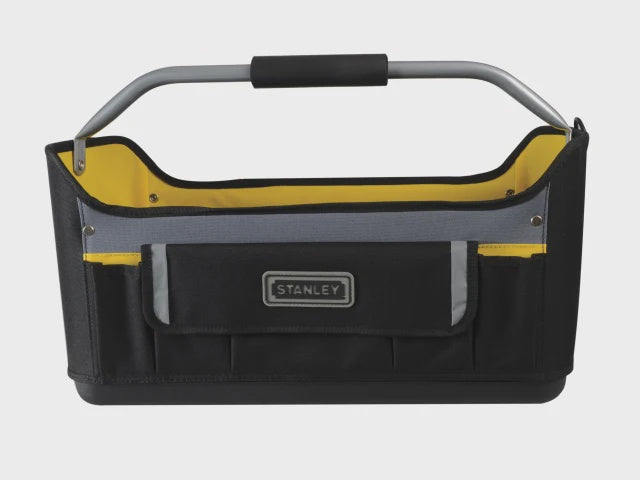
Stanley 1-70-319 20-inch Open Tote
Large open top with internal and external pockets, a carry handle and a rigid waterproof base. 250 x 590 x 290mm. The fabric body isn't described as sealed or weatherproof.
View at DBR Tools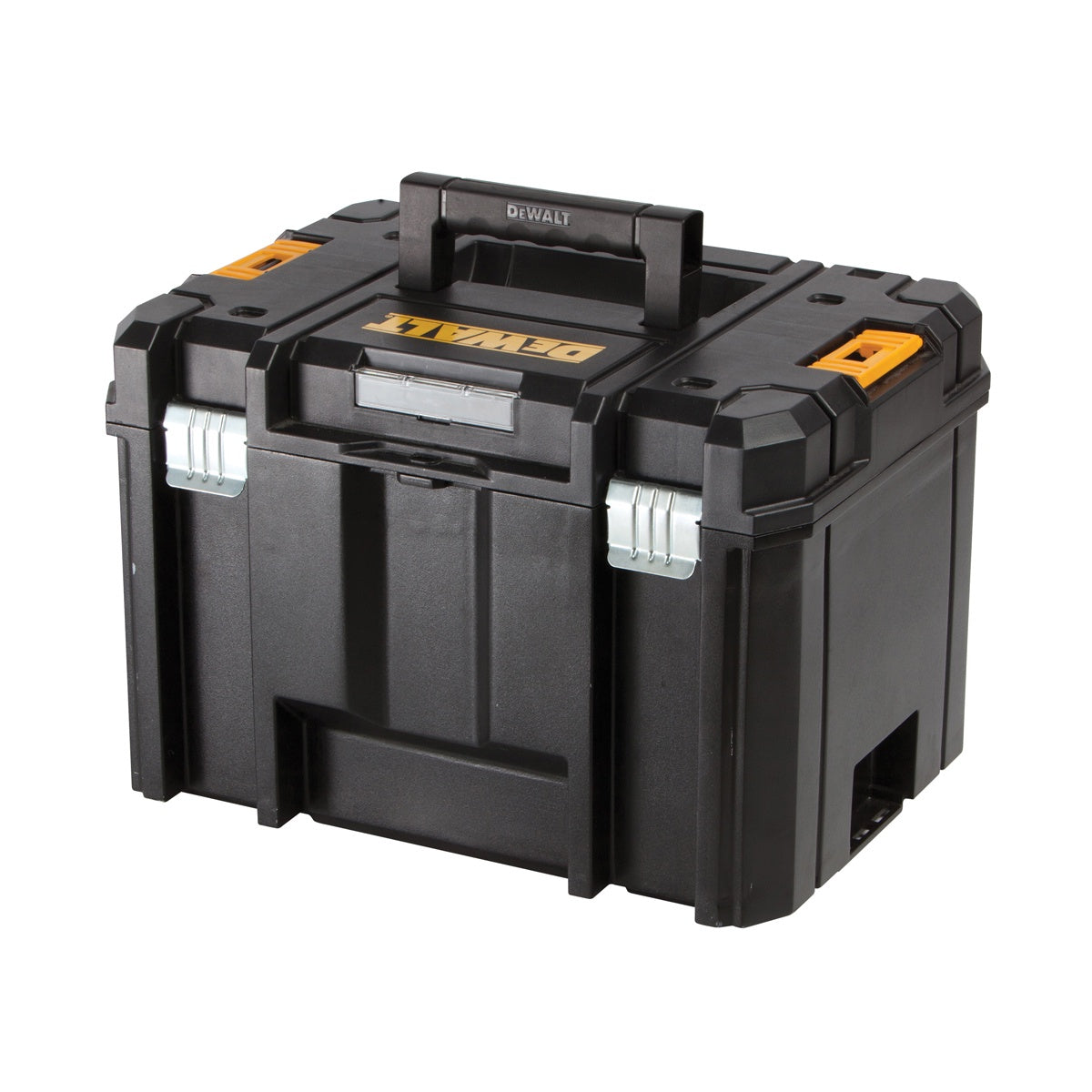
DeWalt DWST1-71195 TSTAK VI Box, 23L
Rigid 23-litre box with a wide handle, metal latches and side connections for TSTAK modules. The listing specifies no tote tray.
View at DBR Tools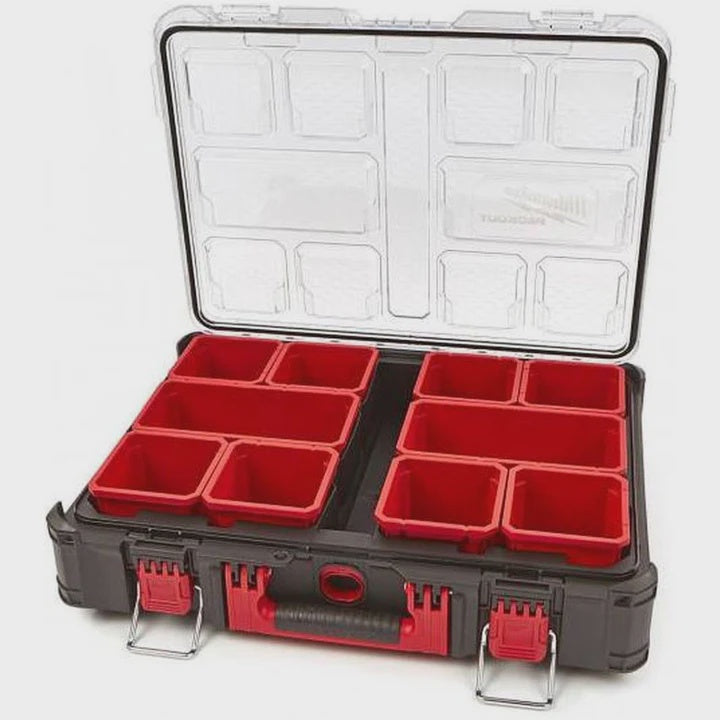
Milwaukee 4932464082 PACKOUT Organiser
10 removable bins, impact-resistant polymer body and an IP65 weather seal. 500 x 380 x 120mm, 1.0kg. Part of the PACKOUT range.
View at DBR Tools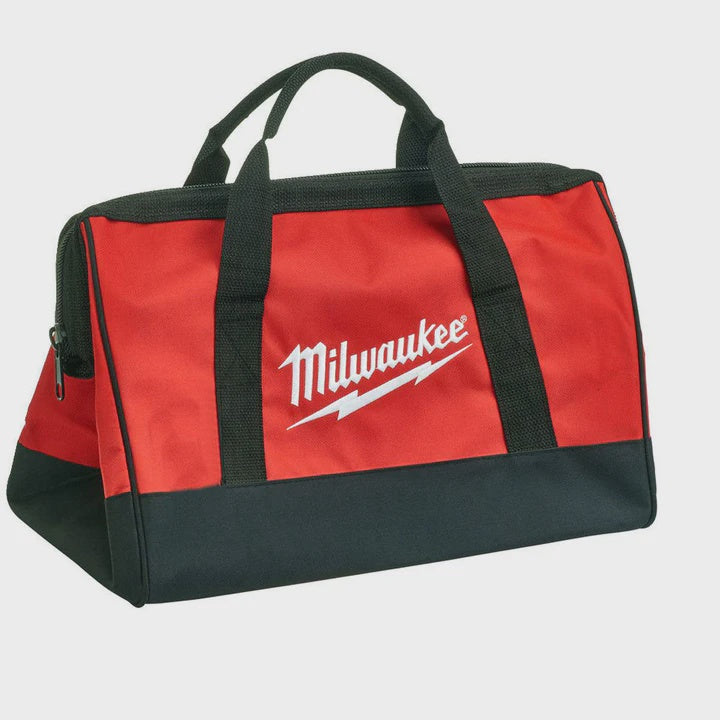
Milwaukee Contractor Medium Tool Bag
Soft contractor bag for larger tools, with double carry handles and a shoulder strap, for moving between sites.
View at DBR Tools| Product | Format | Standout published feature |
|---|---|---|
| Stanley 1-70-319 | Open tote | Rigid waterproof base, open top |
| DeWalt DWST1-71195 | Rigid toolbox | 23 L, TSTAK-compatible side latches |
| Milwaukee 4932464082 | Parts organiser | 10 removable bins, IP65 weather seal |
| Milwaukee Contractor Medium | Soft tool bag | Double handles plus shoulder strap |
Litres alone don't tell you which suits you: compare layout, load limit and protection too. Browse the Tool Storage collection for more.
Six Things to Check Before Buying Tool Storage
- SpaceCheck inner dimensions, not just outside size.
- LoadCheck rated capacity and carrying comfort.
- AccessChoose pockets, trays or removable small-part bins.
- WeatherLook for exact seals or IP ratings, not assumptions.
- SystemVerify modular compatibility and latching.
- MovementChoose handles, straps or wheels for the load.
Internal size: external measurements include walls, handles and fittings, so compare internal dimensions for long or bulky items. Load and comfort: check the maker's rated load as well as handles, strap padding or wheels. Organisation: open compartments suit bulky kit, pockets suit single hand tools and removable bins suit small fittings. Weather: don't assume plastic boxes are waterproof, and for IP-rated cases check the specific model's documented rating. Systems: TSTAK, TOUGHSYSTEM and PACKOUT are distinct systems, so don't assume they connect without checking the manufacturer's compatibility details. Travel: wheels and telescopic handles help, but don't assume they suit rough ground or stairs.
Which Tool Storage Suits Different Needs?
Household DIY: a modest rigid toolbox plus a small organiser. Repair and maintenance: a tote or pocketed bag for quick access, with a separate case for fixings. Joinery and installation: a modular rigid system with an organiser for small parts. A growing collection: stay within one compatible system once its sizes suit you, because boxes that merely look compatible can mean expensive mismatches.
Common Tool Storage Buying Mistakes
- Choosing by litres alone: shape, load rating and layout matter too.
- Assuming a bag is waterproof because its base is.
- Assuming two modular systems connect because both stack.
- Buying a compartment case that doesn't keep small parts separated.
- Buying more storage than you need: more isn't automatically more useful.
Frequently Asked Questions
Is a tool bag better than a toolbox?
Neither is universally better. A bag is often easier for quick access to frequently used tools; a rigid box gives more structure and enclosure. It depends on what you store and how often you carry it.
What is a tool organiser used for?
A parts organiser separates screws, nuts, fixings, bits and other small items into compartments or removable bins, so you find the right one more easily.
Are toolboxes waterproof?
Some boxes and organisers have a manufacturer's water-resistance or IP rating, but toolbox alone doesn't mean waterproof. Check the exact model and any conditions on the rating.
Is an IP65 tool organiser completely waterproof?
No. IP65 covers specified dust-tightness and resistance to water jets in standard tests. It isn't a submersion rating, so check seals, latches and the instructions.
Can DeWalt TSTAK fit Milwaukee PACKOUT?
They're different modular systems. Don't assume direct compatibility without a connector or adapter the manufacturer supports.
What is the difference between a tool tote and a tool bag?
An open tote gives top access without a fully enclosed main compartment, while many tool bags have a zipped or closed compartment. Both may have pockets and straps, and protection varies by model.
Final Verdict: Which Tool Storage Should You Choose?
Start with the items you need to organise and how you move them. Choose a toolbox for a rigid, enclosed space, a bag or tote for a frequently carried kit, or an organiser for small components. Many buyers get the most practical setup from two complementary formats rather than one oversized container.
Check internal dimensions, load rating, system and stock before ordering.
Shop tool storage