


L-class and M-class aren't two levels of suction power. They classify how a dust extractor contains dust hazards. The UK HSE recommends M- or H-class extraction for many higher-risk construction dust tasks, so an L-class machine shouldn't be treated as an all-purpose answer for wood, concrete or silica dust.
For UK trades, the choice should be led by the material and task, not by price or tank size. This guide summarises the classes and HSE guidance, but it isn't a substitute for a workplace risk assessment.
L-Class vs M-Class Dust Extractors: Key Differences
L-class
Low-dust-hazard class
At least 99% dust retention under the class test. Only where the assessed task and approved use permit it.
M-class
Medium-dust-hazard class
At least 99.9% dust retention under the class test. HSE recommends M or H for many wood and silica tasks.
| Question | L-class | M-class |
|---|---|---|
| Classification | Low-dust-hazard | Medium-dust-hazard |
| Dust retention | At least 99% under the class test | At least 99.9% under the class test |
| Suitable for every construction task? | No | No; risk assessment and task guidance still apply |
| Common buying context | Lower-risk tasks where L-class is an approved control | Many professional wood-dust and construction-dust tasks |
| Also compare | Hose fitting, airflow, filter handling, size | Airflow monitoring, filter cleaning, dust handling |
The class must be stated by the manufacturer for the complete machine. A product that simply claims a HEPA filter isn't necessarily a certified M-class extractor.
What Does L-Class Mean?
An L-class extractor is intended for lower-hazard dusts within the limits of its classification and the manufacturer's approved uses. But "dust" covers materials with very different health risks, and an L-class badge isn't permission to use a machine for all sanding, cutting or drilling.
What Does M-Class Mean?
An M-class extractor meets a more demanding classification, with tighter dust-retention requirements and typically more professional dust-handling controls. For potentially harmful construction dusts, the HSE often specifies M- or H-class extraction, depending on the task, alongside a suitable risk assessment. Class tells you about dust-safety requirements; tank volume tells you about capacity.
Why Is Construction Dust a Serious Issue?
Dust from concrete, brick, timber and plasterboard can include particles small enough to reach deep into the lungs. The HSE notes that construction dust may include respirable crystalline silica (RCS), wood dust and other fine particles, and its advice starts with reducing dust at source. On-tool extraction means the tool, capture hood, hose and a suitably specified extractor working as a system, not a vacuum placed nearby. Read the HSE's construction dust guidance, and note that some tasks also need respiratory protective equipment (RPE) even with extraction. See our FFP2 vs FFP3 dust masks guide for the RPE side.
Wood, Silica and Plasterboard Dust
The HSE says to use H- or M-class extraction with an on-tool system for many wood tasks, with suitable hoses. RPE may also be needed.
For tasks like concrete chasing the HSE calls for an H- or M-class unit of sufficient airflow, plus RPE and other controls.
The HSE's task guidance names the extraction it expects. Check the class it specifies for your task rather than assuming.
None of this means any M-class vacuum makes any silica task safe. The whole system, work method, manufacturer instructions, RPE and workplace assessment still matter, and some tasks need H-class or specialist arrangements. Don't use a general shop vacuum where the assessment calls for a certified class. HSE guidance on cutting and sanding wood and chasing concrete shows why class is only one part of the control plan.
The Dust-Control Chain
- AssessIdentify the material, task and exposure with a risk assessment.
- CaptureReduce dust at source and use on-tool capture where appropriate.
- ExtractUse a correctly classed extractor with enough airflow.
- ProtectAdd RPE and other controls where the task requires them.
What Should You Compare Besides Dust Class?
- Verified classification for the full machine, not just its filter.
- Airflow monitoring and warnings expected for its class.
- Filter cleaning: manual, semi-automatic or automatic, and maintenance needs.
- Hose and tool compatibility: adapters, sizes, antistatic features, secure connections.
- Dust disposal: approved bags and containment.
- Power supply: 110V or 240V to suit the site.
- Capacity and portability: tank size, wheels, weight.
Also separate an extractor for on-tool dust control from a basic wet-and-dry vacuum for general cleaning. "Wet and dry" is another feature; it doesn't replace the class rating. And a HEPA filter label doesn't make a vacuum M-class, since classification covers the complete machine, including leakage and safe dust handling.
Dust Extractors at DBR Tools
Examples, not recommendations for any particular task. Stock is very limited, and most of our other M-class extractors are currently out of stock, so check the listing and your required class before ordering.
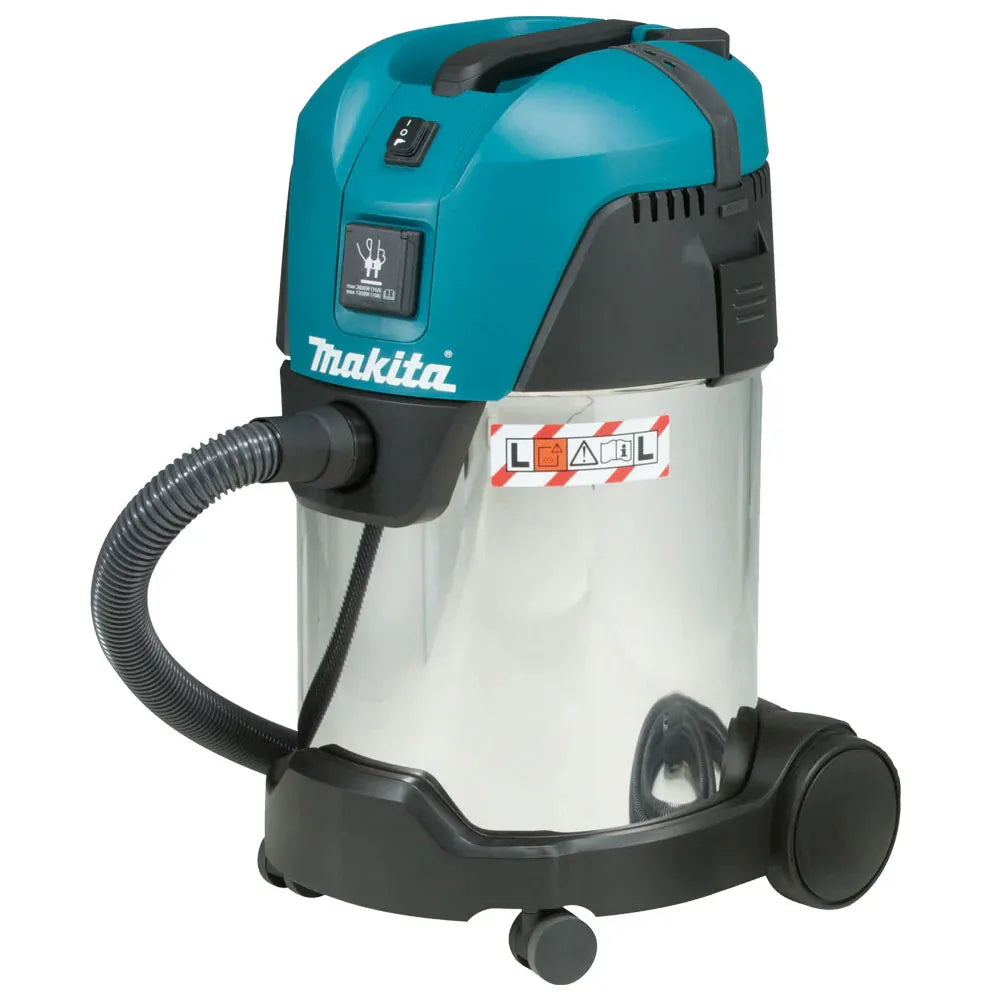
Makita VC3011L Wet and Dry L-Class Dust Extractor
An L-class wet and dry extractor, listed in 240V and 110V. Check that L-class suits your task before buying. 2 in stock.
View at DBR Tools
Makita VC2012L Wet and Dry L-Class Extractor 20L
A smaller 20-litre L-class model for lower-hazard tasks within its approved uses. Only 1 in stock.
View at DBR Tools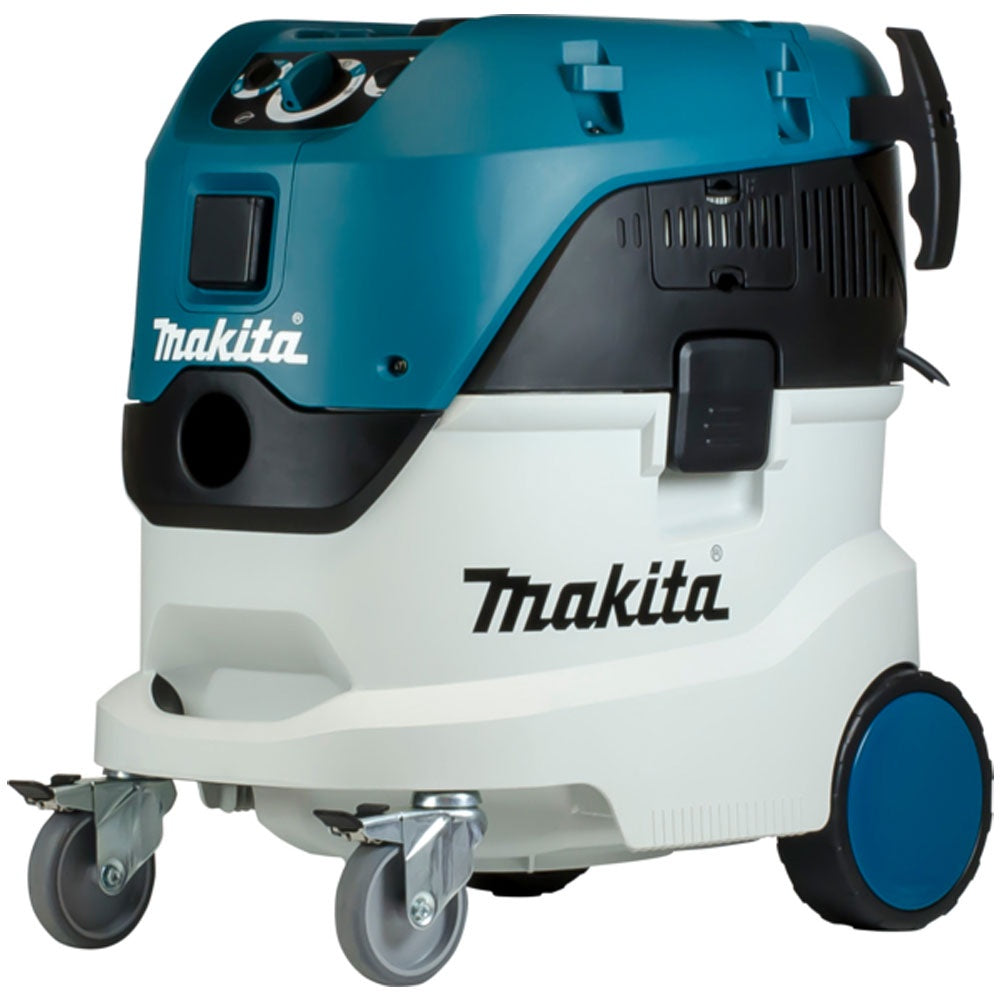
Makita VC4210MX M-Class Dust Extractor 42L
A 42-litre M-class extractor with power take-off, listed in 240V and 110V. Only 1 in stock.
View at DBR ToolsBrowse the corded vacuums and extractors collection.
L-Class vs M-Class FAQs
Can I use an L-class dust extractor for wood dust?
Don't assume so. The HSE recommends M- or H-class extraction for many wood cutting and sanding operations. Refer to the guidance for your actual task.
Do I need M-class for concrete dust?
Many tasks involving concrete or silica need M- or H-class extraction plus other controls. The correct setup comes from a task-specific risk assessment and HSE guidance.
Is M-class stronger than L-class?
M-class is a stricter dust-hazard classification. It doesn't automatically mean a bigger motor, more suction or a bigger tank. Compare airflow separately.
Is H-class always better than M-class?
H-class has more demanding requirements for high-hazard dusts, but the equipment must still suit the hazard and application. Some work needs specialist controls beyond choosing a vacuum.
Can I use a standard wet-and-dry vacuum instead?
Not where a task calls for a certified L-, M- or H-class extractor. General wet-and-dry capability isn't hazardous-dust containment.
The Bottom Line
Choose the dust class for the hazard, then the machine for the job. L-class can suit certain lower-risk situations, but UK HSE guidance commonly specifies M- or H-class extraction for higher-risk construction dust. Compare certified class, airflow, filtration and containment before buying, and never replace a workplace risk assessment with a generic product recommendation.
Verify class, airflow and suitability before purchasing.
Shop corded vacuums