


PU coatings are usually thin and flexible, favoured for fine handling and feel in dry work. Nitrile coatings come in several finishes (smooth, foam, sandy) and are often chosen for wear and grip, including with oily parts. These are broad tendencies, not protection ratings, so check the glove's own EN 388 marking and data sheet.
Two gloves with the same knitted liner can feel very different because of the palm coating. This guide compares the coatings using manufacturer guidance and our listing, not hands-on testing. We don't currently list a PU-coated glove in stock, so the product example is nitrile.
What Does a Glove Coating Change?
PU-coated
Polyurethane palm
Often lightweight and flexible. Valued for dexterity and touch in dry handling.
Nitrile-coated
Nitrile palm
Smooth, foam or sandy finishes. Often chosen for wear resistance and varied grip.
The palm coating affects grip, flexibility, touch sensitivity and durability. A glove must still be chosen for the actual hazard and its tested ratings.
PU and Nitrile in One Table
| Feature | PU-coated glove | Nitrile-coated glove |
|---|---|---|
| Typical emphasis | Fine handling and tactile feel | Durability and varied grip options |
| Coating feel | Often thin and flexible | Varies: smooth, foam or sandy |
| Dry handling | Often very good | Often good |
| Oily parts | Limited, model dependent | Often preferable with a suitable textured or foam coating |
| Abrasion | Product dependent | Many models built for greater wear resistance |
| Chemical protection | Not implied by the coating name | Not implied by the coating name |
No general comparison replaces the glove's data sheet. Foam nitrile isn't the same surface as flat nitrile, thin nitrile can be highly dexterous, and liner, fit and coating area all matter.
Where Polyurethane Tends to Work Well
A thin PU coating is commonly chosen where feeling small objects and moving the fingers freely matter, such as light assembly, packing and other dry handling. But PU doesn't automatically carry an EN 388 cut rating suitable for sharp objects, and shouldn't be assumed to protect against oils, chemicals or heat. For safety-critical work, follow your workplace hazard assessment and the manufacturer's documentation.
How Nitrile Types Differ
Can favour abrasion resistance.
Often chosen for handling in damp or lightly oily conditions.
Aimed at a different grip feel.
Nitrile is a family of coatings, not one design, and performance varies by formulation and the surface handled.
EN 388 Is About Tested Performance, Not Coating Names
Read the marking, not the coating. EN 388 covers mechanical hazards and its digits and letters should be read together with the model's full certification. Two nitrile gloves can have very different ratings, and a "high grip" label isn't cut resistance. Our EN 388 guide explains the ratings, and work glove sizes covers fit. An oversized glove loses the fingertip control a thin coating is meant to give.
How to Decide Without Overbuying
Start with the environment, not a favourite material. Dry light handling rewards touch. Dirty, damp or greasy handling may suit a tested nitrile variant. For sharp edges, chemicals, electricity or heat, a coating alone can't confirm suitability, so look for the dedicated certified protection.
Work Gloves at DBR Tools
Our Super Nitrile Grip listing says the palms and fingers are nitrile-coated and approved to EN 420 and EN 388, and that it enhances abrasion and cut resistance, but it gives no EN 388 digits, so check the packaging. It's sold in size 10 only.
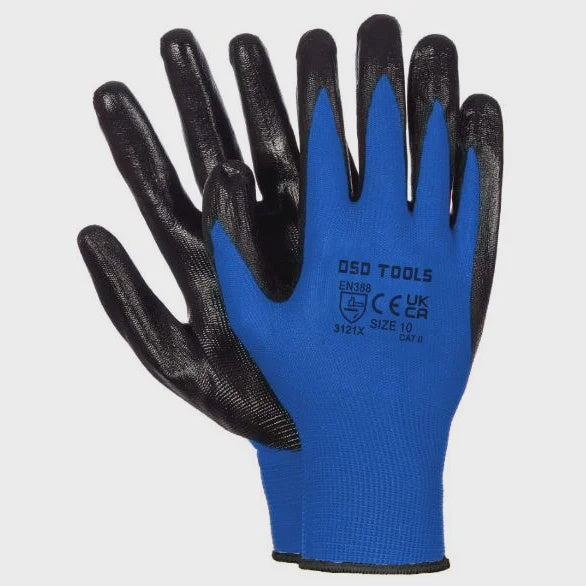
Super Nitrile Grip Gloves, Pack of 12, Size 10 (XL)
Palms and fingers coated in nitrile for grip and dexterity, said to suit oily conditions, with breathable fabric. Approved to EN 420 and EN 388. Size 10 only. 16 in stock.
View at DBR ToolsBrowse Safety & Workwear for other gloves, and check each glove's materials, ratings and size before ordering.
PU vs Nitrile Gloves FAQs
Are PU gloves waterproof?
Not necessarily. A palm coating may leave much of the liner exposed. Check the product's coverage and claims.
Are nitrile-coated gloves chemical gloves?
No. Chemical resistance needs separate, specific testing and suitability information.
Which is better for fine assembly?
Thin PU gloves often feel more tactile, though a fine-gauge nitrile glove may also suit.
Does nitrile always last longer?
Not always. Wear depends on the formulation, tested ratings, material handled and conditions.
The Bottom Line
Pick the coating for the task, then confirm the EN 388 marking and size. PU for light dry feel, nitrile for wear and grip, and neither is a substitute for certified protection against specific hazards.
Check coating, EN markings, size and stock before ordering.
Shop workwear