


Choose the marker by surface and reach. A flat carpenter's pencil is simple and cheap for timber. A deep-hole pencil has a long, narrow tip for recesses a flat pencil can't reach. An ink marker gives a bolder, longer-lasting line on rough, dirty or dark surfaces but can stain finished materials.
On a bench the three look interchangeable, but they differ in reach, how long the line lasts and how clearly it shows on each material. This guide uses product specifications from our listings, not hands-on testing.
Which Is Best for Different Surfaces?
| Surface or task | Often a good first choice | Check first |
|---|---|---|
| Dry timber and plywood | Carpenter's pencil | Lead hardness and how visible the line is |
| Painted metal or plastic | A suitable jobsite marker | Whether the ink can be removed |
| Narrow recessed locations | Deep-hole pencil | Tip reach and replacement leads |
| Finished visible surfaces | A removable marking method | Test on a hidden area for staining |
| Dusty, damp or rough materials | A marker or pencil rated for it | The actual surface conditions |
This is guidance, not a guarantee. The numbers quoted below belong to specific models, not to every pencil or marker of that type.
Why a Flat Carpenter's Pencil Still Has a Place
The rectangular body is easy to carry, cheap in multipacks and unlikely to roll off a bench. Graphite is forgiving when you need to adjust a layout line, though visibility depends on the surface colour and texture. A graphite mark can be faint on very dark timber and hard to see on polished or glazed finishes, and a flat pencil can't reach into recesses. The Excel set lists "almost any material" apart from some metals and polished or glazed surfaces.
Deep-Hole Pencils: The Reach Advantage
A deep-hole pencil has a slim marking point and a shaped body that helps put a mark inside a recess where a flat body would block the view. Many offer replaceable lead, a holster or a built-in sharpener. The OX TRACER 2.0 is listed with 2.8mm lead and a reach of up to 145mm in a 6mm hole, and the Milwaukee mechanical pencil uses refillable 2.8mm 2B graphite leads for visibility on a range of surfaces. Don't carry one model's depth figure over to another, because reach depends on the holder, tip shape and opening.
When an Ink Marker Is Easier to See
An ink marker makes a bold, readable line where graphite is too faint, and it's often more durable under handling. The trade-off is staining and marks that are hard to remove from finished materials. The Milwaukee INKZALL has an acrylic nib for rough surfaces like OSB and concrete, and its listing says it works on wet, oily, dusty and rusty surfaces. That helps visibility, but it doesn't mean any ink cleans off without residue, so check suitability for the finish.
A Useful Buying Checklist
- ReachCan you get the tip to the marking point?
- VisibilityWill the mark show on this colour and texture?
- Removable?Can the mark stay, or must it come off?
- ConditionsIs the surface rough, damp, dusty or glossy?
Many toolkits carry both a graphite pencil and a marker for exactly this reason.
Pencils and Markers at DBR Tools
Examples, not a ranking. Stock varies, so check before ordering.
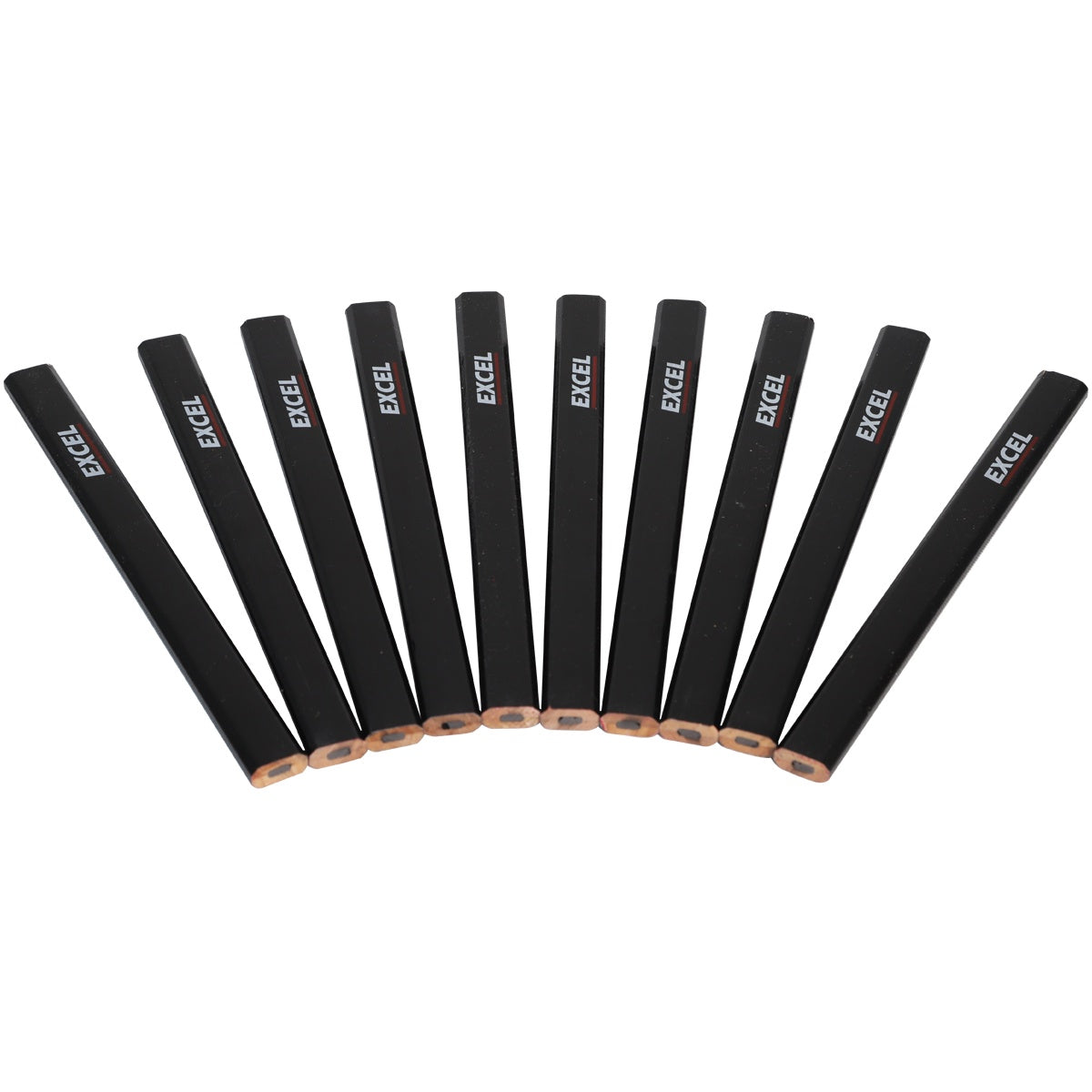
Excel Carpenters Pencil Set, 10 Piece
Flat carpenter's pencils for general carpentry. The listing says almost any material can be marked except some metals and polished or glazed surfaces. 5 in stock.
View at DBR Tools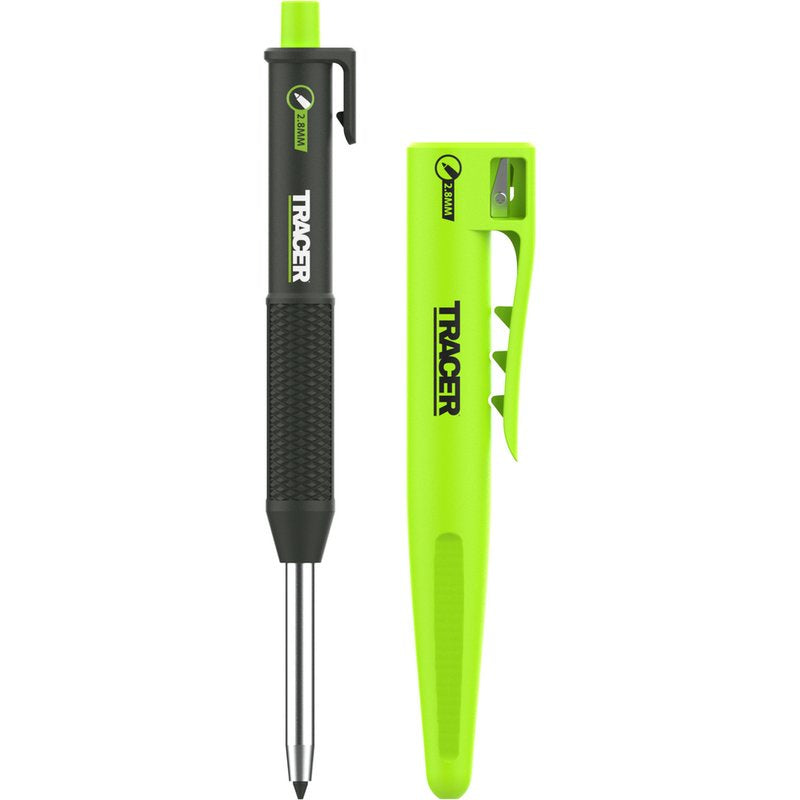
OX TRACER 2.0 2.8mm Deep Hole Pencil
ABS body, 2.8mm lead, reaches up to 145mm deep in a 6mm hole, with a site holster, sharpener, anti-roll design and knurled grip. 7 in stock.
View at DBR Tools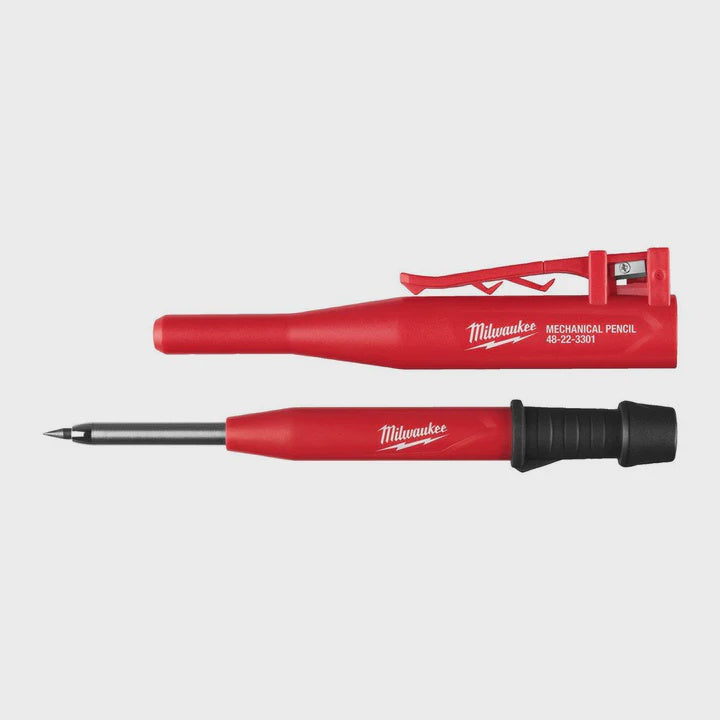
Milwaukee Mechanical Construction Pencil 4932501156
Stainless steel tube, built-in sharpener, push-advance lead and refillable 2.8mm 2B graphite leads (10 supplied), with a protective holster. 5 in stock.
View at DBR Tools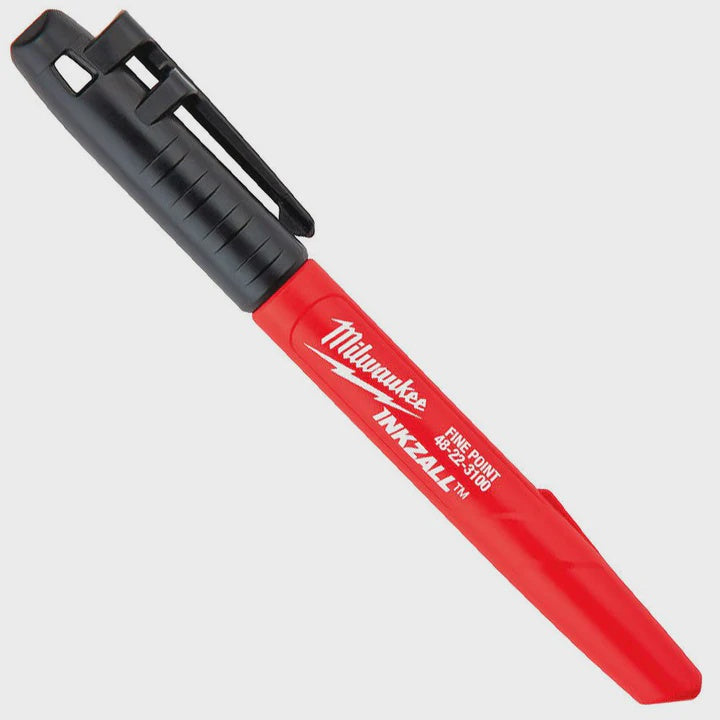
Milwaukee INKZALL Fine Point Marker, Black
Acrylic nib for rough surfaces such as OSB and concrete. The listing says it also marks metal, plywood and plastic, and works on wet, oily, dusty or rusty surfaces. 20 in stock.
View at DBR ToolsBrowse Hand Tools. If you're marking from a measurement, see tape measure vs laser distance measure and combination square vs framing square.
Carpenter's Pencil vs Marker FAQs
Can a carpenter's pencil mark metal?
Sometimes, but legibility can be poor on shiny metal. A marker designed for the surface may be more useful.
Are deep-hole pencils always finer?
No. Their main advantage is reach. Lead diameter and mark width vary by model.
Do jobsite markers wash off?
Some may, some may not. Test on a concealed spot of any finished material.
Is a permanent marker better than graphite?
Not automatically. Permanent marks may be unwelcome on visible finished work.
The Bottom Line
Pick by reach, visibility and whether the mark must come off. A flat pencil for timber, a deep-hole pencil for recesses, an ink marker for rough or dark surfaces, and often a mix of them in the kit.
Check reach, surface suitability and stock before ordering.
Shop hand tools