


Mesh sanding discs have an open structure that can support dust extraction across much of the abrasive surface with compatible equipment. Perforated paper discs collect dust through specific holes and can be a practical, economical choice when the hole pattern matches your sander. Neither is universally better: grit, backing compatibility, the workpiece and the extraction system all matter.
Choosing sanding discs involves more than selecting a grit. The backing affects how dust escapes, how the disc works with a pad and whether it suits your setup. This guide compares open-mesh abrasives such as Mirka Abranet with perforated paper discs such as Mirka Basecut, based on manufacturer information, not hands-on testing.
Mesh vs Paper Sanding Discs: Key Differences
Mesh / net abrasive
Open weave across the disc
Dust paths spread over the face and work best with compatible extraction.
Perforated paper disc
Paper-backed abrasive
Dust exits at pre-cut holes, so the hole pattern must match the pad.
A mesh disc uses an open net backing carrying abrasive grain. Mirka's Abranet uses a polyamide net, and the maker highlights dust removal through a broad area of the abrasive when paired with appropriate extraction. Conventional paper-backed discs bond abrasive to a paper face, and many have pre-punched holes that line up with a suitable backing pad. The words paper disc don't imply poor quality, just as mesh disc doesn't guarantee the best finish.
| Feature | Open-mesh disc | Perforated paper disc |
|---|---|---|
| Backing | Open net or mesh | Coated paper or similar backing |
| Dust paths | Across much of the surface | Through designated holes |
| Pad considerations | Mesh-compatible backing and fastening | Suitable hole arrangement and fastening |
| Clogging | Open structure can help reduce loading | Varies with coating and dust removal |
| Typical buying point | Extraction performance and abrasive life | Familiar format and cost per disc |
These are general differences, not a ranking. A good multi-hole paper disc can perform very well with proper extraction, and mesh can't make up for poorly controlled dust at source.
Does Mesh Sandpaper Really Reduce Dust?
It can help improve dust removal, but a maker's dust-free sanding label isn't an exposure-free working environment. Mirka explains that Abranet's open structure puts extraction openings close to the grains, which can reduce dust left on the surface and the build-up that clogs abrasive. Actual dust control depends on the whole system:
- AbrasiveMesh or correctly perforated paper, giving dust paths through the abrasive.
- Backing padA suitable pad and hole pattern with open channels for collection.
- ExtractorCorrectly specified extraction so dust is captured at the source.
Dust hazard. The HSE warns that sanding wood can create harmful airborne dust, and recommends controlling it at source with suitable extraction. Respiratory protection may also be needed according to your exposure assessment. See HSE guidance on sanding wood.
Which Disc Gives a Better Finish?
There's no universal winner. The surface depends on the grain, grit grade, coating, material, tool and finishing system. Mesh may help keep cutting consistent by limiting dust between the abrasive and the workpiece, while a paper disc designed for the surface and compatible with extraction can also finish excellently. Comparing a P120 paper disc with a P320 mesh disc wouldn't isolate the backing, since the grits differ, so compare discs of the same grit and application, and weigh pack quantities and expected use. If a coating maker specifies a preparation grade, follow it rather than choosing the finest grit available.
Mirka Sanding Discs at DBR Tools
Paper discs suit buyers whose sander already accepts a specific perforated pattern, who buy in quantity or want a familiar general-purpose abrasive. Mesh is worth comparing when dust extraction is a priority and your equipment supports it. Don't compare on sticker price alone: consider cost per disc, pack size, wear and extraction compatibility. Stock is limited, so check your grit and pack.
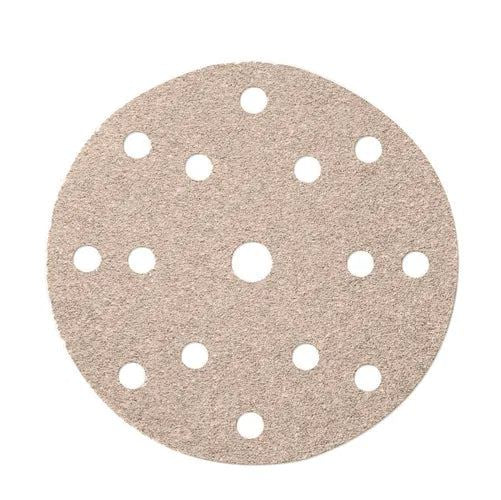
Mirka Basecut 150mm Hook & Loop 15-Hole Discs
Paper-backed aluminium oxide discs in one listing from P40 to P320 (P40 and P60 in packs of 50, the rest in packs of 100). 15-hole pattern, so check it matches your pad.
View at DBR Tools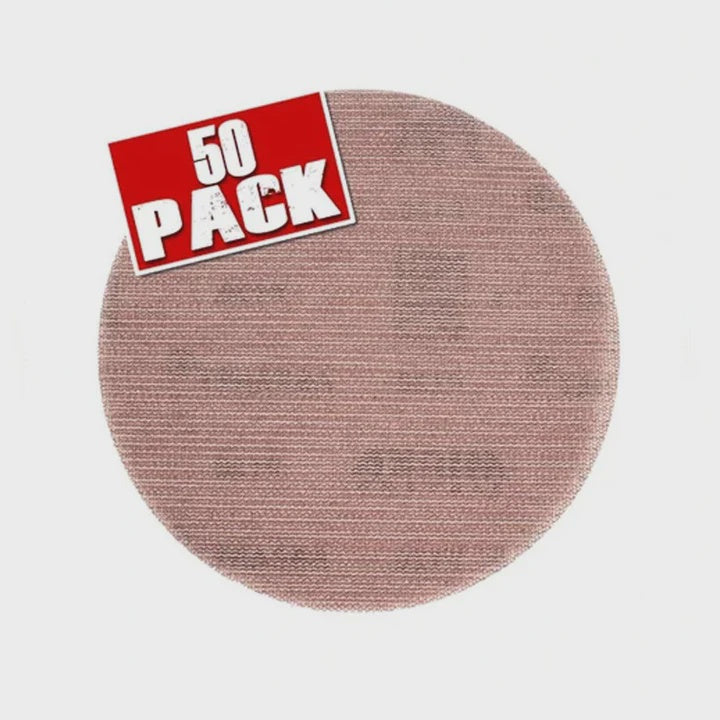
Mirka Abranet 150mm Mesh Discs, Box of 50
Aluminium oxide grain on a polyamide net backing, P80 to P400. Described by Mirka for dust-free sanding with suitable extraction.
View at DBR Tools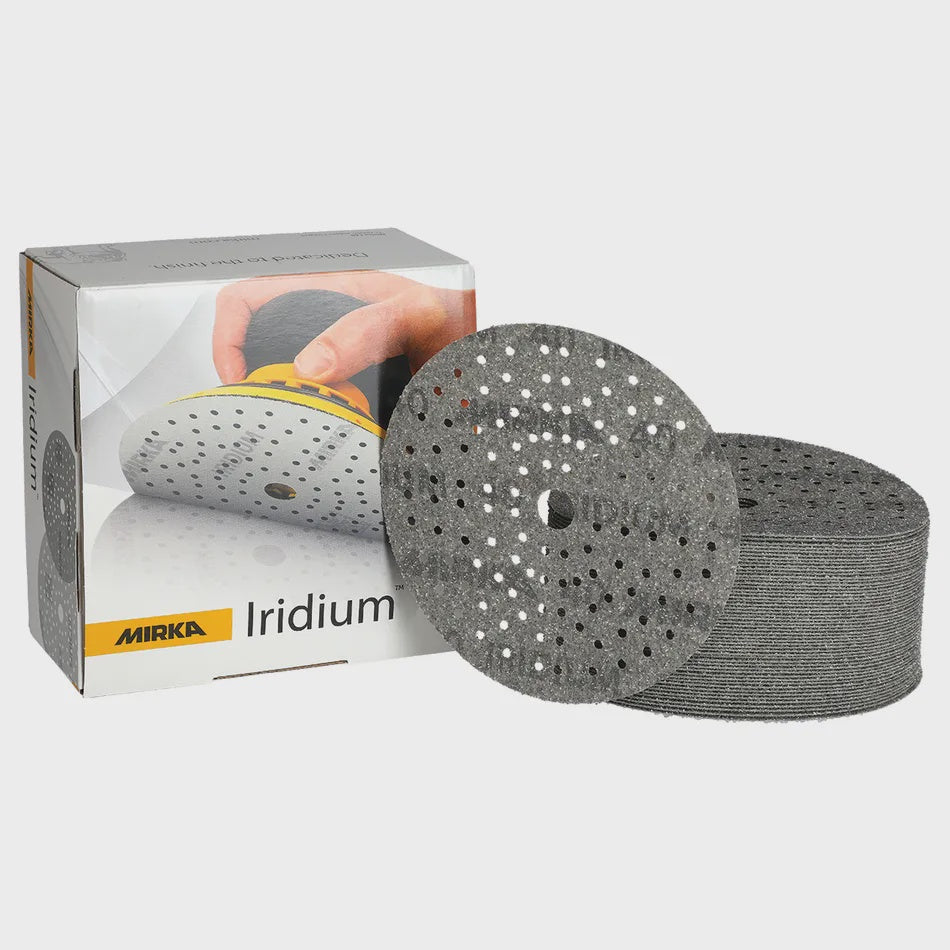
Mirka Iridium 150mm Grip 121-Hole Discs
A premium paper option with ceramic and aluminium oxide grain and a multi-hole pattern for extraction, P40 to P320. Check your pad has the 121-hole layout.
View at DBR ToolsHow to Check Sanding Disc Compatibility
Check your sander's exact disc size.
Match the grade to the material and finish.
Check hook-and-loop compatibility.
Match holes or net to your extraction setup.
Compare quantity, expected life and job needs.
Check the abrasive is approved for the material.
Diameter: a 125mm and a 150mm disc aren't interchangeable just because both are hook-and-loop. Hole pattern or mesh: perforated discs need a suitable pad hole pattern, and mesh needs a backing system that permits the intended extraction. Fastening: many products use hook-and-loop, sometimes called Grip, but other equipment differs. Grit: grit describes abrasive size, not the backing, and lower P-numbers are coarser. Pack size: a box of 50 mesh discs and a pack of 100 paper discs shouldn't be compared on total price alone.
Common Buying Mistakes
- Assuming mesh means zero dust: an open abrasive can't replace source extraction.
- Right diameter, wrong fastening system.
- Ignoring the backing pad: mesh or perforated paper needs a compatible pad and extraction path.
- Using grit as a measure of durability: abrasive life depends on several factors.
- Comparing different grits as equivalent: P80 and P320 serve different needs.
- Buying from photos alone: check part number, dimensions and intended surfaces.
Frequently Asked Questions
Is mesh sandpaper better than ordinary sandpaper?
Mesh abrasives can improve dust extraction with compatible equipment and may resist clogging well. Perforated paper-backed discs can still offer excellent results and good value. The better choice depends on the task and system.
Can I use mesh discs on any random orbital sander?
Not necessarily. Check the diameter, attachment method, backing pad and manufacturer's compatibility instructions. Similar-looking discs aren't automatically interchangeable.
Do mesh sanding discs need extraction?
Their dust-removal advantage relies on suitable extraction. Mesh by itself doesn't eliminate airborne dust.
Are 15-hole sanding discs the same as multi-hole discs?
No. A 15-hole format is one particular arrangement of perforations. Other multi-hole patterns differ, so check whether the holes align with your backing pad.
What is the difference between P120 and P320 sanding discs?
P120 is a coarser abrasive grade than P320. Suitability depends on the material, its condition and the finish maker's preparation requirements.
Is Abranet a paper sanding disc?
No. Abranet is Mirka's net abrasive range, with a polyamide net backing that differs from conventional paper-backed abrasives such as Basecut.
Final Verdict: Mesh or Paper Sanding Discs?
Choose on compatibility and the work, not the backing alone. Mesh discs are attractive where effective dust extraction is a priority and your system supports open-net abrasives. Perforated paper discs remain practical for many everyday jobs, particularly where your pad already uses that hole pattern. Confirm your equipment requirements first, then compare grit grades for the material and finish.
Check disc size, hole pattern, grit and stock before ordering.
Shop Mirka