


Safety glasses usually look like sturdy spectacles with impact-resistant lenses and side protection. Safety goggles fit more closely around the eyes, generally using a head strap and a surrounding frame or seal. Goggles are often the better starting point when a task involves significant dust or liquid splashes, but only a model specifically rated for that hazard is suitable. Neither style provides universal protection.
Different jobs expose the eyes to different hazards. Choosing the right eyewear means thinking about what could reach your eyes, rather than buying the thickest-looking lenses. This UK guide covers how glasses and goggles compare, which standards to check and what to look for before buying.
What's the Difference Between Safety Glasses and Safety Goggles?
The main difference is how the eyewear fits around the eyes.
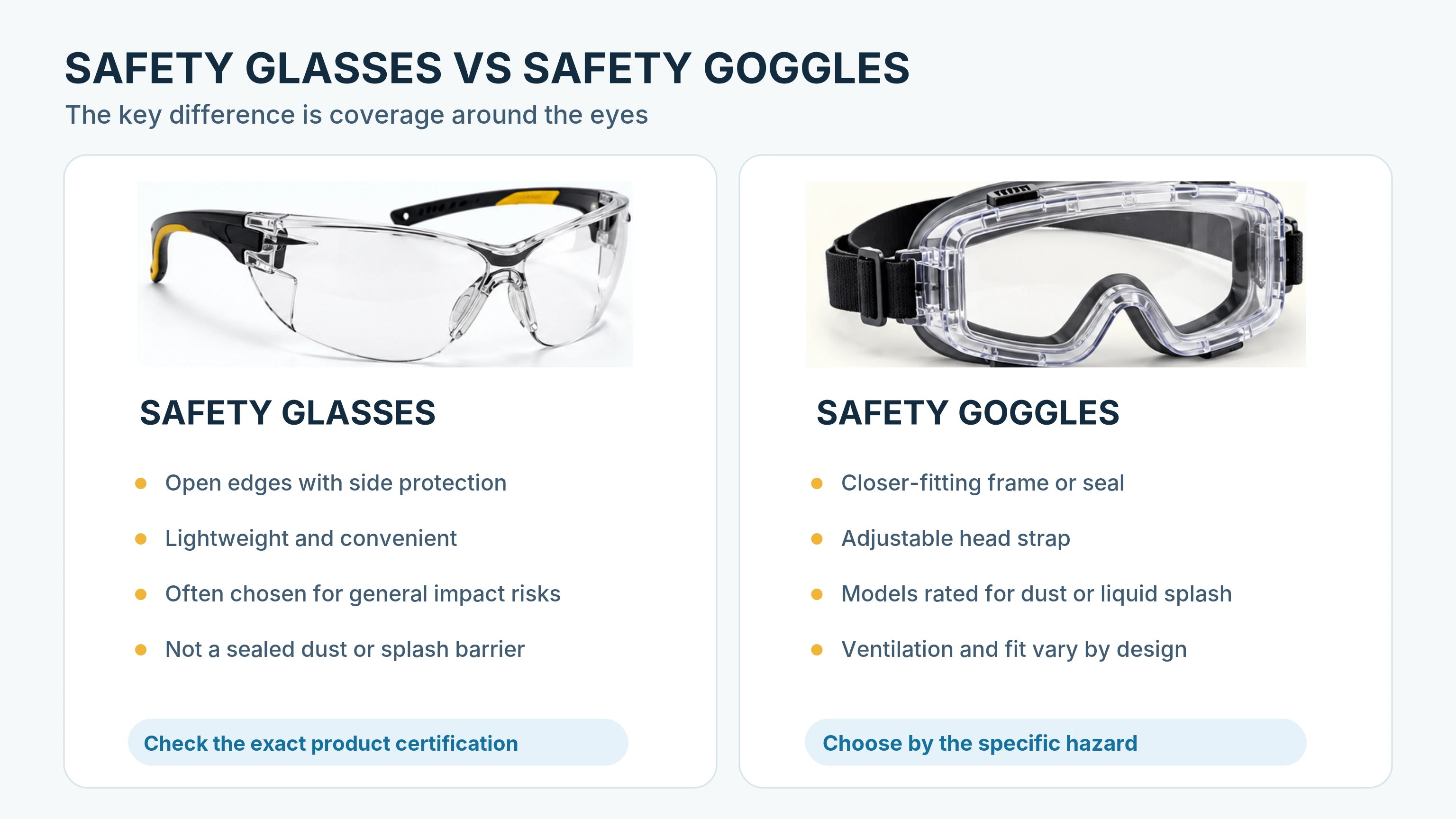
Safety glasses use spectacle-style arms, sometimes with wraparound lenses or side shields. They suit everyday workshop tasks where an appropriate impact rating and side protection are required. Safety goggles typically use an elastic head strap and a closer-fitting frame, which, depending on design and certification, can suit dust, droplets or splashes entering from different directions.
However, not every goggle is dust-tight or liquid-splash-rated. Some have direct ventilation openings that make them unsuitable for certain exposures. The marking and manufacturer's instructions matter more than appearances.
| Feature | Safety glasses | Safety goggles |
|---|---|---|
| Typical fit | Spectacle arms, open areas at the edges | Head strap, closer-fitting frame or seal |
| Everyday convenience | Often light and easy to put on | Can be bulkier or warmer |
| Flying particles | Suitable only when impact-rated for the hazard | Suitable only when impact-rated for the hazard |
| Fine dust | Open gaps may admit dust | Choose goggles specifically rated for fine dust |
| Liquid splash | Ordinary safety glasses are generally insufficient | Select a specifically splash-rated model |
| Prescription glasses | Prescription safety spectacles or approved overspecs | Some goggles are designed to fit over spectacles |
| Key buying check | Impact rating, side protection and fit | Impact/splash/dust rating, seal, ventilation and fit |
When Are Safety Glasses a Suitable Choice?
Suitable impact-rated safety glasses with side coverage are a common option where the main assessed risk is lower-energy flying fragments. Look for clear vision, adequate side coverage, secure arms, a comfortable nose bridge and a documented level of protection for the hazard.
A wraparound shape is not automatically a dust seal, and tinted lenses do not necessarily protect against hazardous optical radiation. Do not treat ordinary tinted safety glasses as welding or laser eye protection. Those need specialised products certified for the hazard.
Clear lenses suit indoor work where colour recognition and light matter. Suitable tinted or indoor/outdoor lenses can help in brighter conditions, if chosen for the light and the job.
When Are Safety Goggles the Better Option?
Goggles are commonly chosen when a risk assessment identifies a need for additional coverage around the eyes, including certain dust or liquid-splash hazards.
Dust and airborne debris
Fine particles can move around the sides of ordinary spectacles. For substantial airborne dust, select goggles whose actual certification covers the dust hazard. Goggles protect the eyes; they do not replace dust extraction or required respiratory protection.
Chemical splashes and droplets
Chemical splashes need eye protection selected for the substance and exposure. A liquid-splash-rated goggle may be appropriate, but a particular chemical can also call for specific materials, a face shield or other controls. A goggle with an open vent should not be assumed to give the same protection as one designed and rated for liquids.
Higher-energy flying debris
Some activities create projectiles that need higher impact resistance and sometimes additional face protection. A face shield may be required in addition to suitable eye protection, not necessarily instead of it.
Which Is Better for Common Hazards?
| Hazard | Typical eyewear | Important check |
|---|---|---|
| Flying particles | Impact-rated glasses or goggles | Check impact rating and side coverage |
| Fine airborne dust | Close-fitting dust-rated goggles | Ventilation and seal must match the hazard |
| Chemical splashes | Liquid-splash-rated safety goggles | Check chemical compatibility and markings |
| High-energy debris | Task-rated eye and face protection | A face shield may be additional protection |
This table gives starting points, not an automatic PPE prescription. The UK Health and Safety Executive (HSE) says eye protection should be selected according to the actual risks of impact, dust, splashes and other workplace hazards.
UK Safety Eyewear Standards: EN 166 and EN ISO 16321
EN 166
Earlier certification standard
Widely used for occupational eye protection. Valid existing certifications can remain on sale during the permitted period.
EN ISO 16321-1
Current standard for new certifications
BS EN ISO 16321-1:2022+A1:2025. BSI gives 11 November 2025 as the transition date for new certifications.
An older EN 166 marking does not automatically make a product unsuitable or counterfeit. It does mean you should check the specific certification, markings, intended protection and current conformity documents.
What markings matter?
- The applicable standard and certification for the exact product.
- Impact performance for the risk in the task.
- Dust or liquid-splash suitability, where those hazards are present.
- Optical suitability and coatings, such as anti-fog or anti-scratch.
- Fit and compatibility with respirators, helmets and hearing protection.
Marking systems differ between the old and new standards, so consult the manufacturer's instructions and declaration of conformity rather than guessing what a letter or number means.
What Features Matter When Buying?
The right protection for your job
Start with the hazard, not the brand or price. An economical pair certified for the task beats pricier eyewear lacking the protection you need.
A secure, comfortable fit
Eyewear should fit without slipping, leaving gaps or blocking vision; the HSE highlights fit. For goggles, check the seal sits correctly and the strap holds them without excessive pressure.
Anti-fog, scratch resistance and cleaning
Anti-fog coatings and ventilation may reduce fogging, but none guarantees a fog-free lens, and fogged or scratched lenses impair vision. Clean and store eyewear as the manufacturer directs and replace it when damaged.
Compatibility with other PPE
Ear defenders, helmets and respirators can affect fit. A respirator may push goggles out of position, and thick spectacle arms may interfere with some hearing-protection seals. Check the whole PPE combination.
Safety Eyewear Available at DBR Tools
These are examples of actual listings, not claims that one model suits every hazard. Both are spectacle-style; we have no safety goggles in stock at the moment.
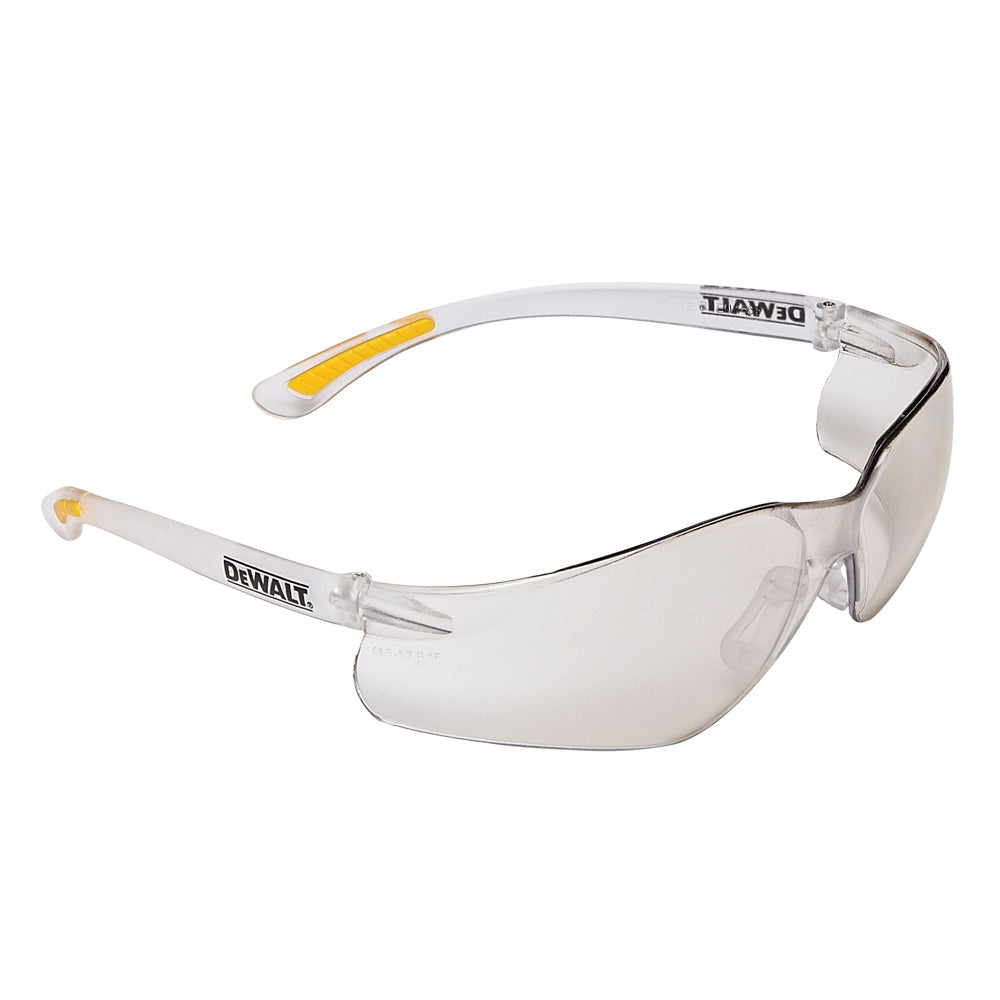
DeWalt Contractor Pro Safety Glasses
Polycarbonate lenses, scratch-resistant hard coat, rubber-tipped arms, soft nosepiece, inside/outside lens. Listed as EN 166 1F. Limited stock.
View at DBR Tools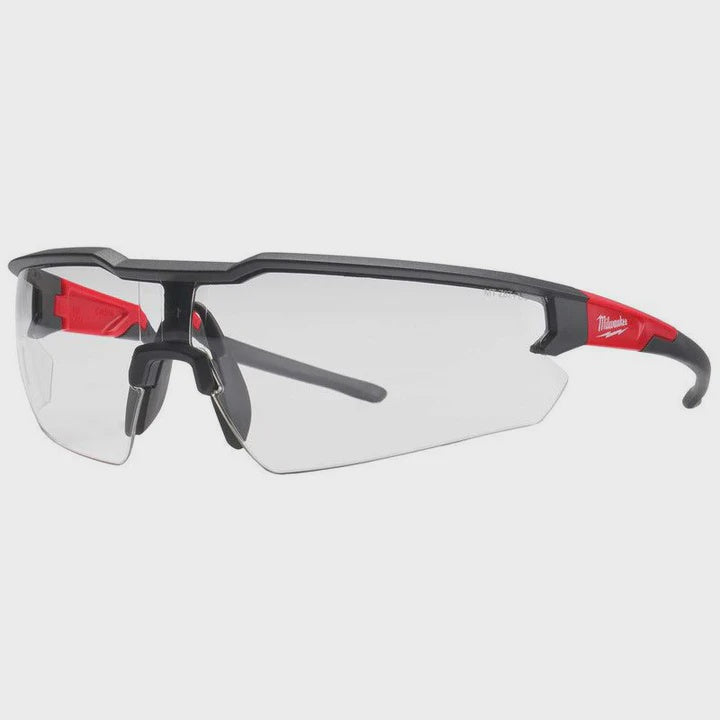
Milwaukee Enhanced Safety Glasses
Lightweight glasses with anti-scratch and anti-fog lenses and flexible arms. Listed as EN166 and EN170/EN172. Clear, tinted, grey and yellow lenses.
View at DBR ToolsDo not substitute either pair for liquid-splash-rated goggles or other specialised protection. Browse the Safety & Workwear collection and confirm the product's documented protection matches the intended use.
Are Safety Goggles Always Safer Than Safety Glasses?
No. A goggle's closer fit can help where dust or splashes are a concern, but protection depends on the specific hazard and the product's certified performance. Some glasses suit a particular impact hazard while some goggles do not. Fit, ventilation, PPE compatibility and the condition of the eyewear also matter. The answer isn't “always buy goggles”: it's buy protection that is certified and suitable for the actual task.
Frequently Asked Questions
Can safety glasses protect against dust?
Safety glasses may protect against some flying particles, but open gaps around the frame can let fine airborne dust reach the eyes. Where fine dust is a concern, check for suitably rated goggles and dust-control measures.
Are safety goggles better for grinding?
Grinding creates hazardous, fast-moving debris. The right choice depends on the process and assessed risk, including the impact protection required and any additional face shield. A goggle label alone does not guarantee suitability.
Do I need goggles for chemical splashes?
Where there is a significant risk of chemical splash, ordinary safety glasses are often insufficient. Choose appropriately certified splash-protective eyewear and follow the chemical's safety information and your risk assessment.
Can I wear ordinary prescription glasses instead of safety glasses?
No. Ordinary prescription spectacles are not a substitute for certified protective eyewear. Consider rated prescription safety glasses, approved overspecs or goggles designed to fit over spectacles.
Is EN 166 still acceptable in the UK?
It may be. New certifications use EN ISO 16321, but products with valid EN 166 certification may remain on sale during the permitted period. Check the conformity documentation and suitability for the risk.
Are face shields a replacement for safety goggles?
Not automatically. A face shield adds facial coverage, but some tasks need safety glasses or goggles underneath it. Follow the PPE requirements for the job.
Final Verdict: Safety Glasses or Safety Goggles?
Choose safety glasses when the risk assessment calls for impact-rated spectacle-style protection and they fit properly. Choose appropriately rated safety goggles where the work needs closer coverage against dust, droplets or splashes. Neither is automatically best, and both must be matched to the actual exposure.
Confirm current stock, markings and the manufacturer's intended use before ordering.
Shop safety & workwear