


Synthetic-filament brushes are the usual practical choice for water-based emulsion and many modern water-based finishes. Natural bristle has traditionally been associated with solvent-based paints and varnishes. Formulations vary, so follow the manufacturer's guidance for the specific product and don't assume all gloss needs natural bristle.
Two brushes can look near-identical yet behave differently once loaded. The filament is one factor, alongside shape, width and build quality. This guide is based on manufacturer guidance and DBR Tools listings, not hands-on testing.
Synthetic and Natural Bristle Compared
Synthetic filaments
Manufactured fibres
Often well suited to water-based paints. Engineered to hold shape and release paint smoothly.
Natural bristle
Animal hair
Traditionally common for solvent-based finishes. Can absorb water and lose firmness.
| Feature | Synthetic filaments | Natural bristle |
|---|---|---|
| Material | Polyester or nylon blends | Animal hair or bristle |
| Water-based paints | Often well suited | Can absorb water and lose firmness |
| Solvent-based finishes | Many modern synthetics are suitable; check the label | Traditionally a common choice |
| Shape retention | Engineered filaments can hold a consistent profile | Depends on bristle grade and finish |
| Buying check | Paint compatibility | Suitability for your coating |
Why Do Synthetic Fibres Work Well With Emulsion?
Water-based paints flow differently from solvent-based coatings. Synthetic filaments can be designed to hold their shape, flex consistently and release paint smoothly in them, which is why many wall and ceiling ranges use synthetic blends. Handle shape, tipping and construction matter as much as the material name, and a poor synthetic brush isn't automatically better than a well-made natural one.
Are Natural-Bristle Brushes Only for Gloss?
No. Gloss describes sheen, not whether a paint is water-based or solvent-based. Modern water-based gloss is widely available, and some brushes are made for it, while natural bristle's long history is with oil- or solvent-based coatings. Read the full paint specification, especially water- or solvent-based, and the application tools the maker recommends.
What our Harris listings say. The Harris Essentials walls and ceilings set is labelled for emulsion and washes out with warm soapy water. The gloss set is labelled for gloss on interior woodwork, says do not wet and asks for a specialised cleaner after use, which points to a solvent-based finish. Neither listing states the filament material, so we don't claim one.
Brush Width and Shape Matter Too
An angled brush gives precise edges and tight-corner control.
A wider flat brush covers open surfaces in fewer passes.
Small brushes for control in narrow areas, broad ones for open walls.
Filament length, tip quality and stiffness affect the finish too. A brush made for wall and ceiling emulsion isn't automatically an ideal woodwork brush, even if both use manufactured fibres. A product labelled for a particular coating is a better guide than appearance alone.
Paint Brushes at DBR Tools
Examples chosen on their stated use. Stock is limited, so check before ordering.
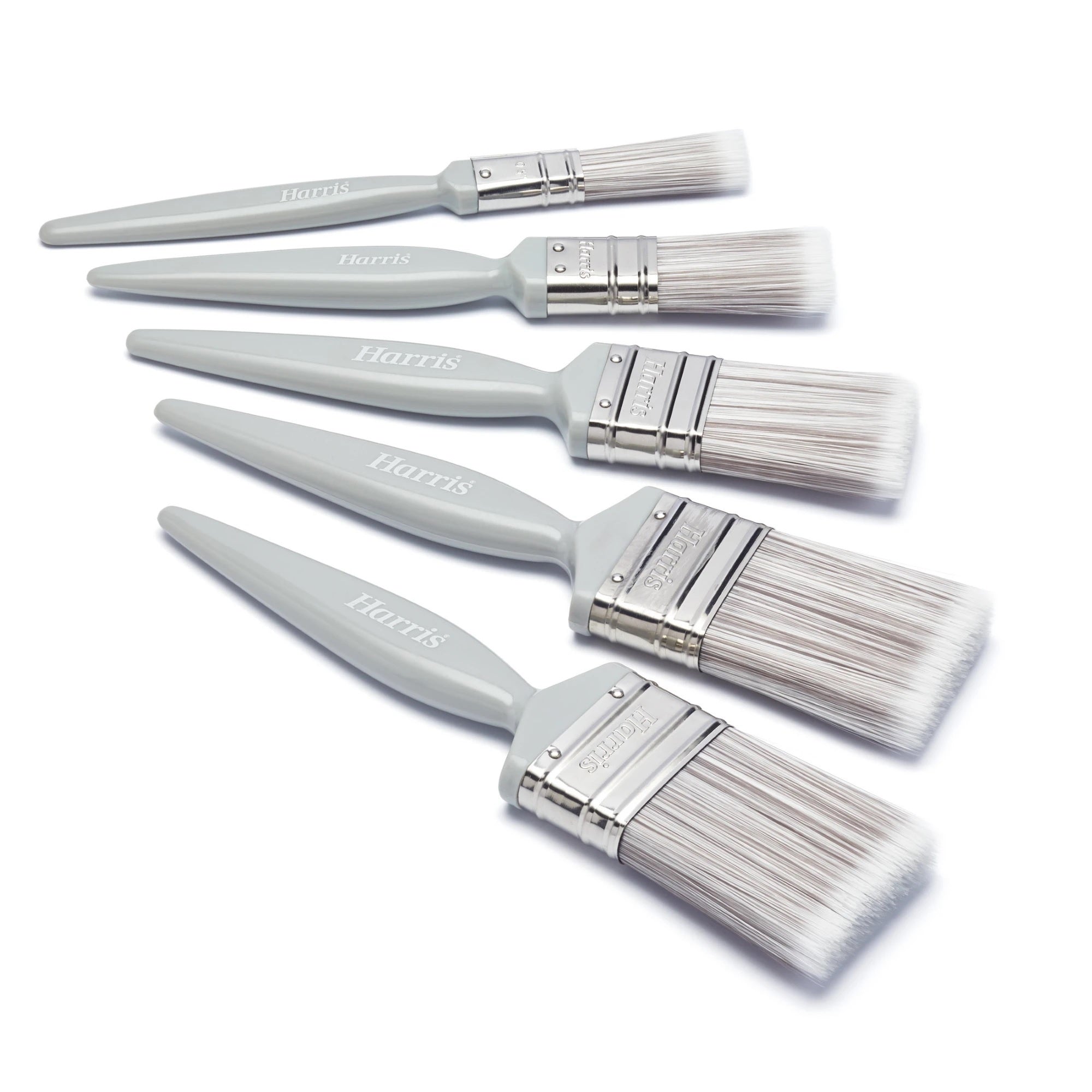
Harris Essentials Walls & Ceilings Brush Set, 5 Pack
For emulsion on interior walls and ceilings: 1in, 1.5in and 2in brushes. Aftercare says to wash in warm soapy water.
View at DBR Tools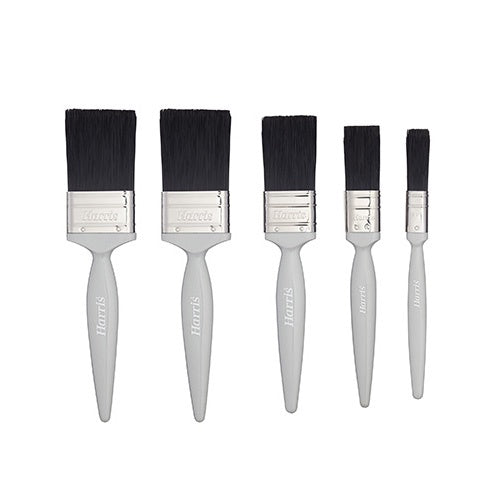
Harris Essentials Gloss Brush Set, 5 Pack
For gloss on interior woodwork: 0.5in, 1in, 1.5in and 2in. The label says do not wet and use a specialised cleaner after use.
View at DBR Tools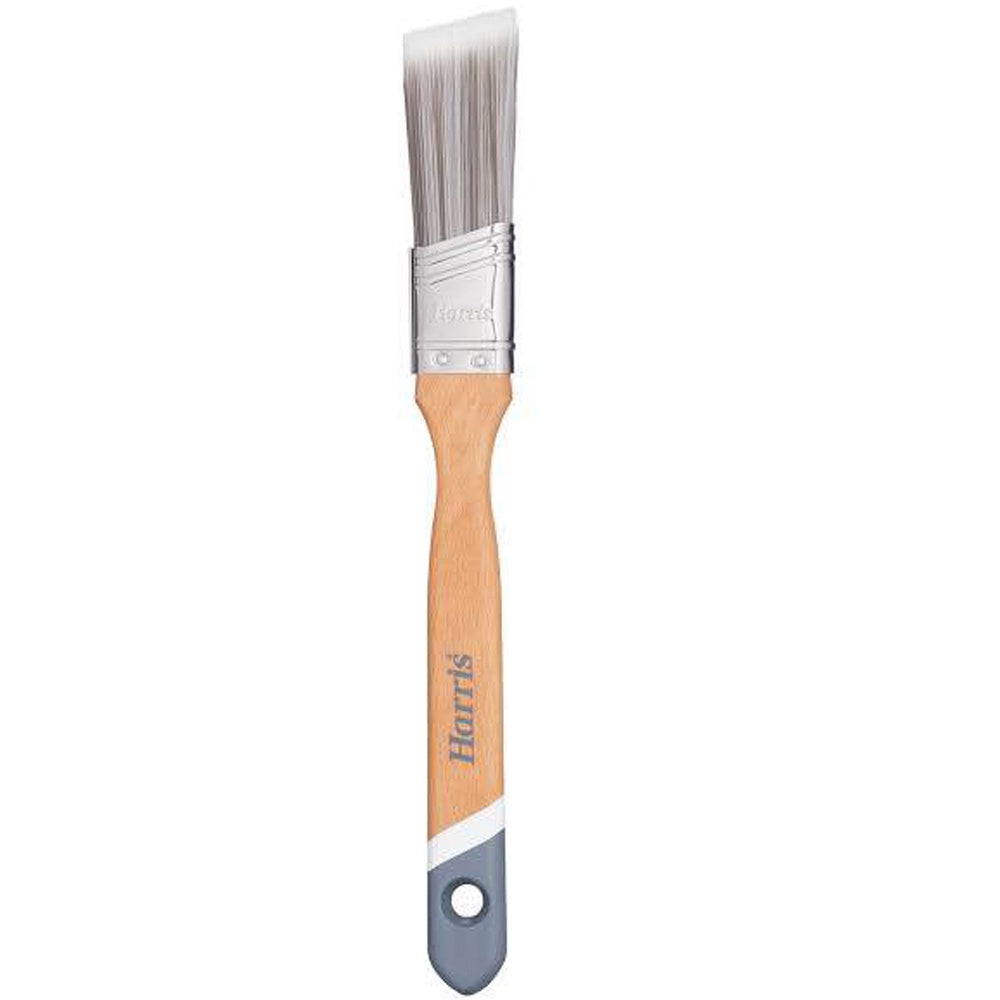
Harris 2in Ultimate Angled Reach Brush
An angled 2in brush with a longer handle for reach, for use with emulsion on walls and ceilings.
View at DBR ToolsHow to Compare Two Brushes at the Same Price
- Paint labelConfirm the brush is intended for your coating.
- Shape and widthAngled for edges, flat for larger areas.
- Maker informationCheck fibre type, cleaning method and surface.
- Head qualityClean tips, aligned filaments and a firm ferrule.
- ValueA well-matched mid-priced brush can beat a specialist one for the wrong coating.
Aftercare and Safety
Cleaning varies by paint and brush. Water-based emulsion brushes are usually washed with warm soapy water, while solvent-based products may need a specialist cleaner. Follow the coating and brush labels, including disposal guidance. Ventilate the space, and keep paint and cleaners away from children. Dried paint in the ferrule, loose filaments and a deformed tip make neat edges harder, so replace a worn brush.
Synthetic vs Natural Bristle FAQs
Can a synthetic brush be used with gloss?
Often yes, especially if its manufacturer says it is compatible with that gloss formulation. Water-based or solvent-based is a more useful guide than the word gloss.
Is natural bristle always smoother?
No. Smoothness depends on paint, filament design, brush quality, technique and the surface.
What is the best brush for emulsion?
A brush labelled for water-based emulsion is a sound start. Angled or flat depends on the area.
Are mixed-bristle brushes available?
Yes. Blended designs aim to combine characteristics, but compatibility still needs checking.
See also Paint Brush vs Roller and Masking Tape vs Painter's Tape.
The Bottom Line
Choose the brush for the coating, then the shape for the job. Synthetic suits most emulsion work; for gloss and woodwork, follow the paint and brush labels.
Check coating, width and stock before ordering.
Shop Harris decorating