


Zinc plating is a thin coating on a carbon-steel screw; stainless is a different alloy that resists corrosion through its chromium content. Zinc-plated screws suit dry and sheltered work, while stainless is usually the better bet for persistent damp, outdoors and more aggressive environments. Neither label alone guarantees suitability.
It's easy to treat "rust resistant" as one thing. Coating and base metal behave differently, and the right choice depends on where the screw will live. This guide draws on British Stainless Steel Association guidance and Timco product data, not hands-on testing.
Zinc-Plated vs Stainless Steel Screws at a Glance
Zinc-plated
Coated carbon steel
A protective zinc layer over a steel core. Economical, but damage to the coating reduces protection.
Stainless steel
Corrosion-resistant alloy
Chromium in the alloy gives the resistance, so it isn't only a surface layer. Grade still matters.
| Consideration | Zinc-plated | Stainless A2 (304) | Stainless A4 (316) |
|---|---|---|---|
| What it is | Carbon steel with a zinc coating | Austenitic stainless | Stainless with molybdenum |
| Corrosion resistance | Depends on coating and exposure | Good for many general uses | Better in many chloride-rich settings |
| Dry interior work | Often enough | Rarely needed | Rarely needed |
| Damp or outdoor | Only where the maker's rating covers it | Often suitable | Often preferred near the coast |
| Not corrosion-proof? | Correct | Correct | Correct, even 316 can corrode in harsh conditions |
What Does Zinc Plating Protect Against?
Zinc helps protect the steel beneath, but thickness, the coating system, joint detail and the actual environment decide how long it lasts. Bright zinc isn't the same as heavy-duty exterior protection, and a yellow finish doesn't identify a corrosion standard. Fastener makers publish ratings. Timco, for example, scores screws on a 1 to 5 corrosion scale, where its zinc-and-yellow Classic range is a 2 (occasionally damp or wet, rural and sheltered areas) and its C2 deck screw is a 3 (urban and industrial areas with a low salt atmosphere).
A2 and A4 Stainless Aren't Identical
For common austenitic stainless screws, A2 is generally associated with grades such as 304 and A4 with molybdenum-bearing grades such as 316. The British Stainless Steel Association notes 316 is often preferable to 304 in more chloride-rich environments. That doesn't make every A4 screw suitable for seawater immersion or structural use, since exposure, crevices, loading and the exact fastener standard all matter.
Which Makes Sense in Dry Interior Work?
A suitable zinc-plated carbon-steel screw is usually enough for dry internal joinery and general fixing, provided the size, head and strength fit the job. Paying extra for stainless brings little practical benefit in a dry cupboard or trim. But a bathroom, pool area or damp utility room is not the same as a dry living room, and some timber treatments change the corrosion risk.
What About Decking, Fencing and Coastal Locations?
Repeated wetting, treated timber, salt and trapped moisture make corrosion resistance matter more. Correctly specified stainless fasteners are often worth considering for outdoor timber work, and nearer the coast a more corrosion-resistant grade may be better, though even 316 can suffer localised corrosion in harsh seawater conditions. For load-bearing structures, follow the designer's fastener specification. Swapping materials can change both mechanical and corrosion performance. For decking choices see wood screws vs decking screws.
Stainless isn't a drop-in swap for hardened steel. It behaves differently under torque and can be softer than a hardened carbon-steel screw, so don't substitute one for the other where a fixing is engineered or load-rated. Mixing metals in a damp joint can also cause galvanic corrosion.
Fastener Specification Checklist
- ExposureDry, damp, outdoor or coastal?
- Base materialZinc-plated steel, A2 or A4 stainless.
- Maker ratingLook for a stated corrosion rating or standard.
- Size and headDiameter, length, head and drive must suit the job.
- LoadFollow any engineered or load-rated fixing schedule.
Head profile and drive matter too: see countersunk vs pan head screws and Phillips vs Pozidriv vs Torx.
Screws at DBR Tools
These are zinc-based and coated examples. We don't currently list stainless screws in stock, so none are linked here. Stock is limited.
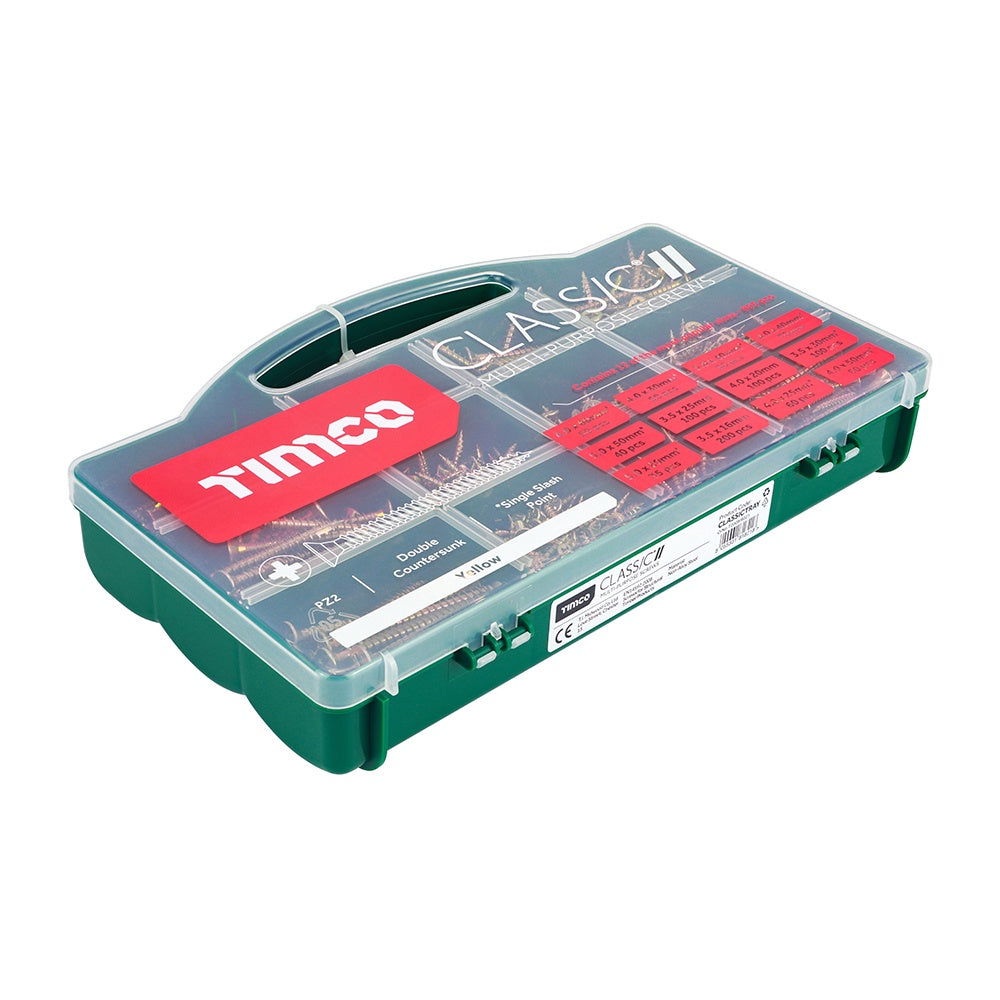
Timco Classic Multi-Purpose Screws Mixed Tray, 895 Pieces
Zinc and yellow double-countersunk PZ2 screws in 12 sizes. Corrosion rating 2: occasionally damp or wet, rural and sheltered areas. Only 1 in stock.
View at DBR Tools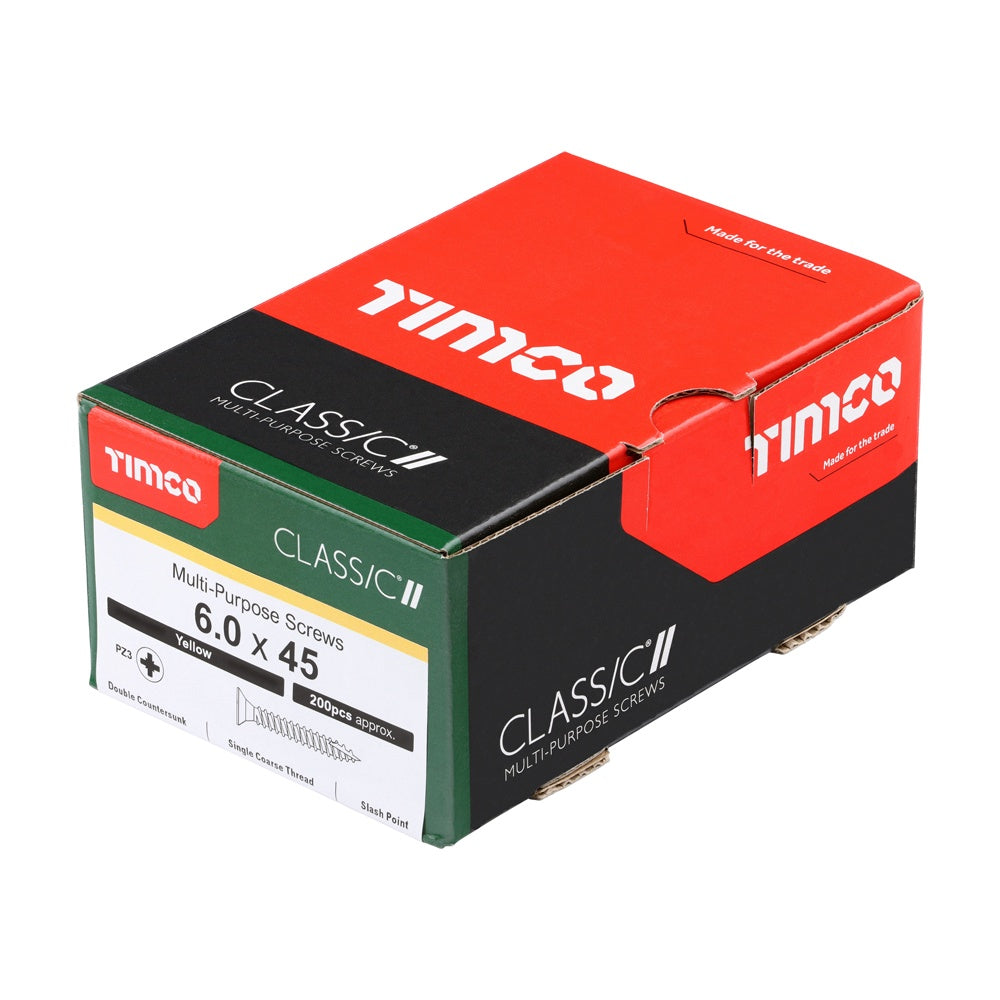
Timco Classic 6.0 x 45mm Multi-Purpose Screws, 200 Box
Carbon steel, zinc and yellow, double countersunk, PZ2. Same corrosion rating of 2. 7 in stock.
View at DBR Tools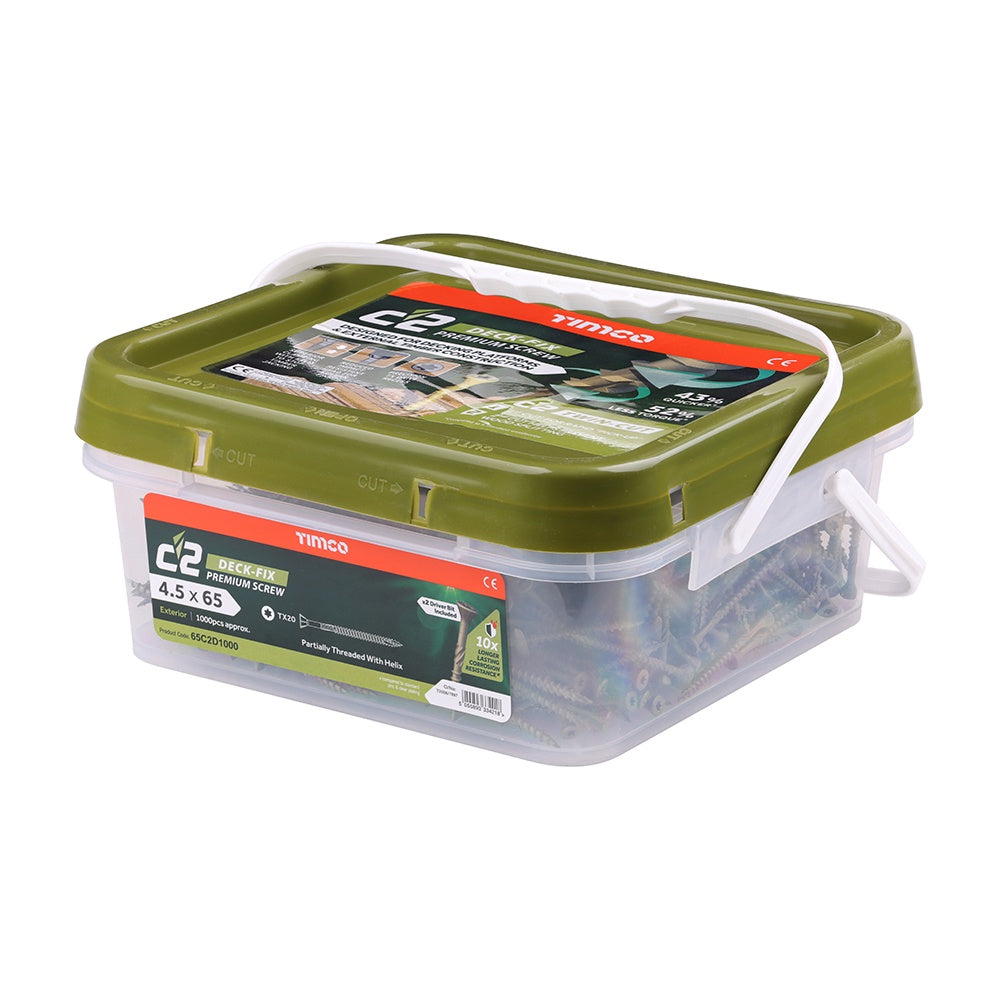
Timco C2 4.5 x 65mm Deck-Fix Screws, 1000
Green organic coating, salt-spray tested to 1,000 hours, corrosion rating 3 (urban and industrial areas with low salt). TX20, BS EN 14592. 4 in stock.
View at DBR ToolsZinc-Plated vs Stainless Screws FAQs
Are zinc-plated screws stainless steel?
No. Zinc plating is a surface finish on a base metal; stainless is an alloy.
Is A4 stainless rust-proof?
No. It resists corrosion better in many conditions but can still corrode in aggressive environments.
Can I use standard plated screws outside?
Only where the coating and the maker's corrosion rating cover that exposure.
Is yellow zinc stronger than bright zinc?
Colour alone doesn't establish strength or a corrosion standard.
The Bottom Line
Match the screw to the environment, not the colour. Zinc-plated is fine for dry and sheltered work, stainless earns its cost outdoors and in damp, and the maker's corrosion rating or a specified grade beats guesswork.
Check corrosion rating, size and stock before ordering.
Shop screws